

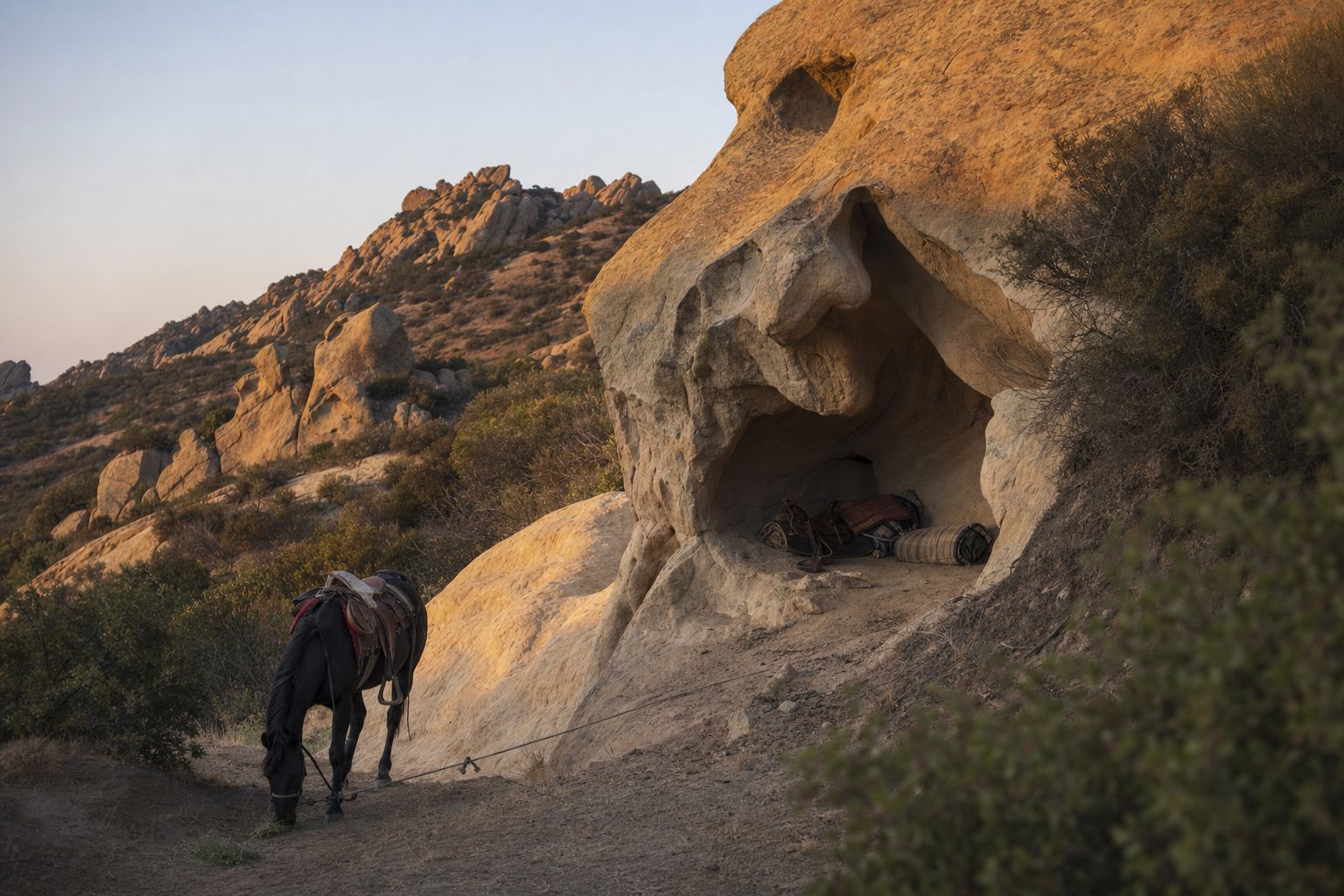
No California outlaw is better documented than Tiburcio Vásquez: not folklore built on a sensationalized pulp biography like Joaquín Murrieta, but a real, closely reported 23-year career that ended in a Hollywood Hills manhunt and a public execution in San Jose. This Tiburcio Vásquez outlaw story holds up against the historical record in a way most bandit legends don't. He was also, by his own gang’s account, undone as much by an affair with a lieutenant’s wife as by any lawman.
Tiburcio Vásquez: A Respected Family, a Fandango Gone Wrong
Vásquez was born August 11, 1835, in Monterey, to a respected Californio family. The family’s adobe home reportedly stood behind Colton Hall for decades afterward. He was educated enough to read and write fluently, an accomplishment period accounts say he took real pride in his whole life. His criminal path opened at seventeen: at a fandango in 1852, in the company of local bandit Anastacio Garcia, a constable named William Hardmount was killed. Vásquez fled into the hills with Garcia, who taught him the trade that would define the rest of his life.
A California Motive, and a First Prison Term
By his own account, Vásquez framed his banditry as retaliation against Anglo-American discrimination toward Californians of Spanish and Mexican descent, and held onto a vague hope of helping Mexico reclaim California. Whatever the mix of motive and opportunity, by 1856 he led his own gang, rustling and rebranding stolen horses from Monterey County to Los Angeles. His first serious mistake came in spring 1857: caught trying to sell a rustled herd near Newhall, he was sentenced to five years at San Quentin — the first of three stints there over the following decade and a half, in a "career" of holdups and horse theft mostly confined to central California, often alongside fellow bandits Juan Soto and Tomás Redondo ("Procopio," or "Red-Handed Dick").
Tres Pinos Makes the Outlaw a Household Name
Until August 1873, Vásquez was just one of several wanted Californio bandits, nowhere near as famous as Joaquín Murrieta. That changed when his gang raided the small town of Tres Pinos, in San Benito County, killing three men (including a victim named Leander Davidson, the murder Vásquez was ultimately tried for) for a haul of just $200. The raid made him a household name statewide, and Governor Newton Booth's initial $1,000 reward would climb far higher within months.
An Affair, a Betrayal, and a Firefight at Little Rock Creek
Vásquez fled south with two trusted men, Clodovio Chávez and Abdon Leiva, soon joined by Leiva’s wife, Rosaria. What undid the gang wasn’t a posse; it was Vásquez's long-standing weakness for the wrong women. While camped on Little Rock Creek in the San Gabriel Mountains, Leiva caught his wife and his chief in an affair, was talked out of shooting Vásquez on the spot by Chávez, and instead rode to Lyon's Station and surrendered to authorities — readily turning informant. Acting on Leiva's information, Sheriff Adams of Monterey County and Sheriff William Rowland of Los Angeles County cornered the gang at Little Rock Creek in a running gunfight; Vásquez and Chávez escaped on foot into the chaparral after Vásquez's horse broke its leg and had to be shot, but the posse recovered the gang's stolen horses and camp supplies.
The Coyote Holes Stage Robbery
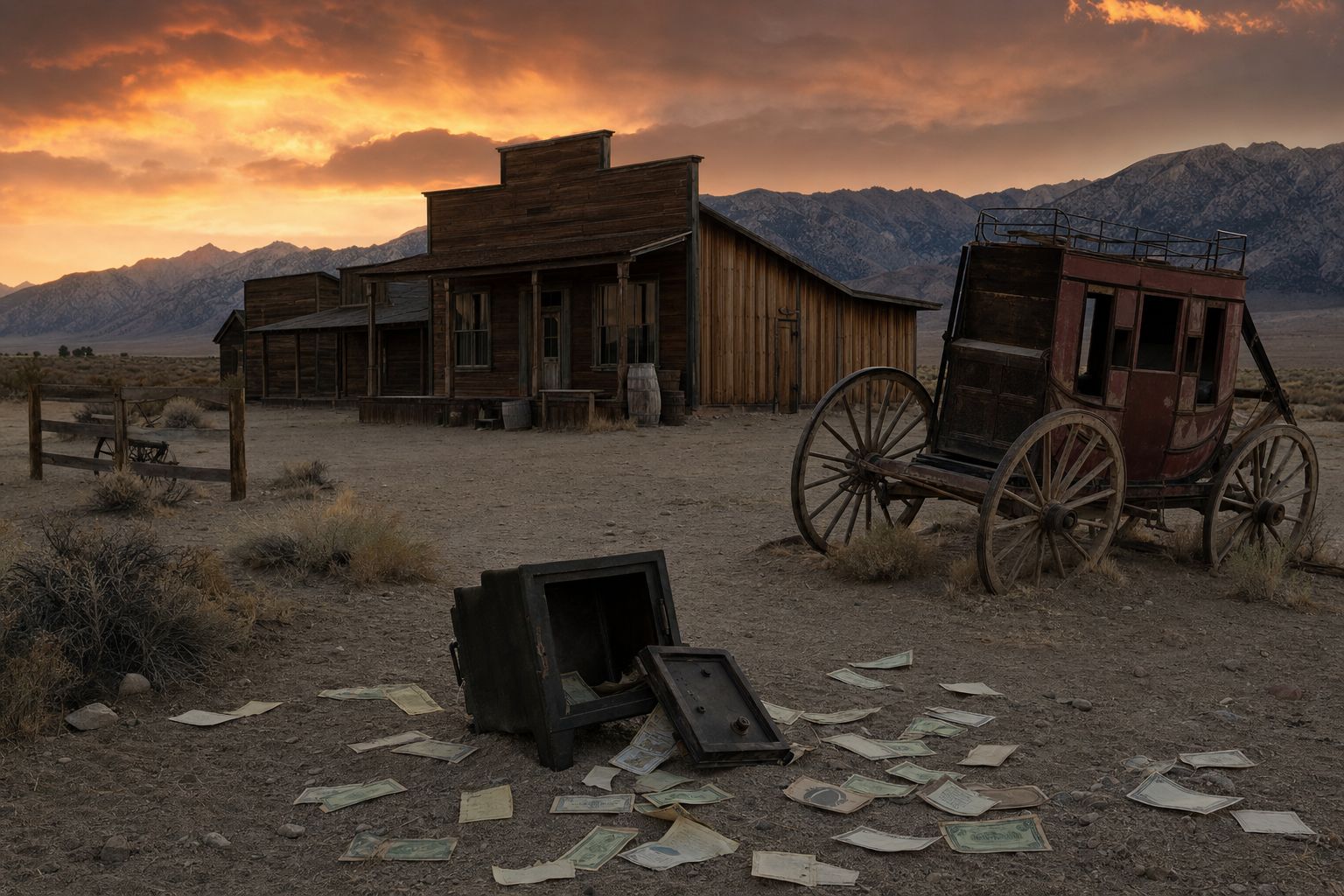
With Rosaria abandoned, pregnant, in the mountains (she eventually made her own way home to San Jose), Vásquez rebuilt his gang and struck again — sacking the town of Kingston in Fresno County that December for over $2,500. The state legislature authorized $15,000 to hunt him down, and famed Alameda County Sheriff Harry Morse joined the chase. Fleeing toward the Owens Valley, Vásquez's gang held up the Coyote Holes stage station (a hold-up remembered today by the "Robbers Roost" rock formation they used to scout it) and robbed the Owens Valley stage itself, whose passengers included Mortimer Belshaw, the mine owner behind Cerro Gordo's silver fortune. The strongbox held mostly worthless mining stock certificates rather than cash, which Vásquez, disgusted, scattered to the wind.
Robbers Roost to Repetto Ranch
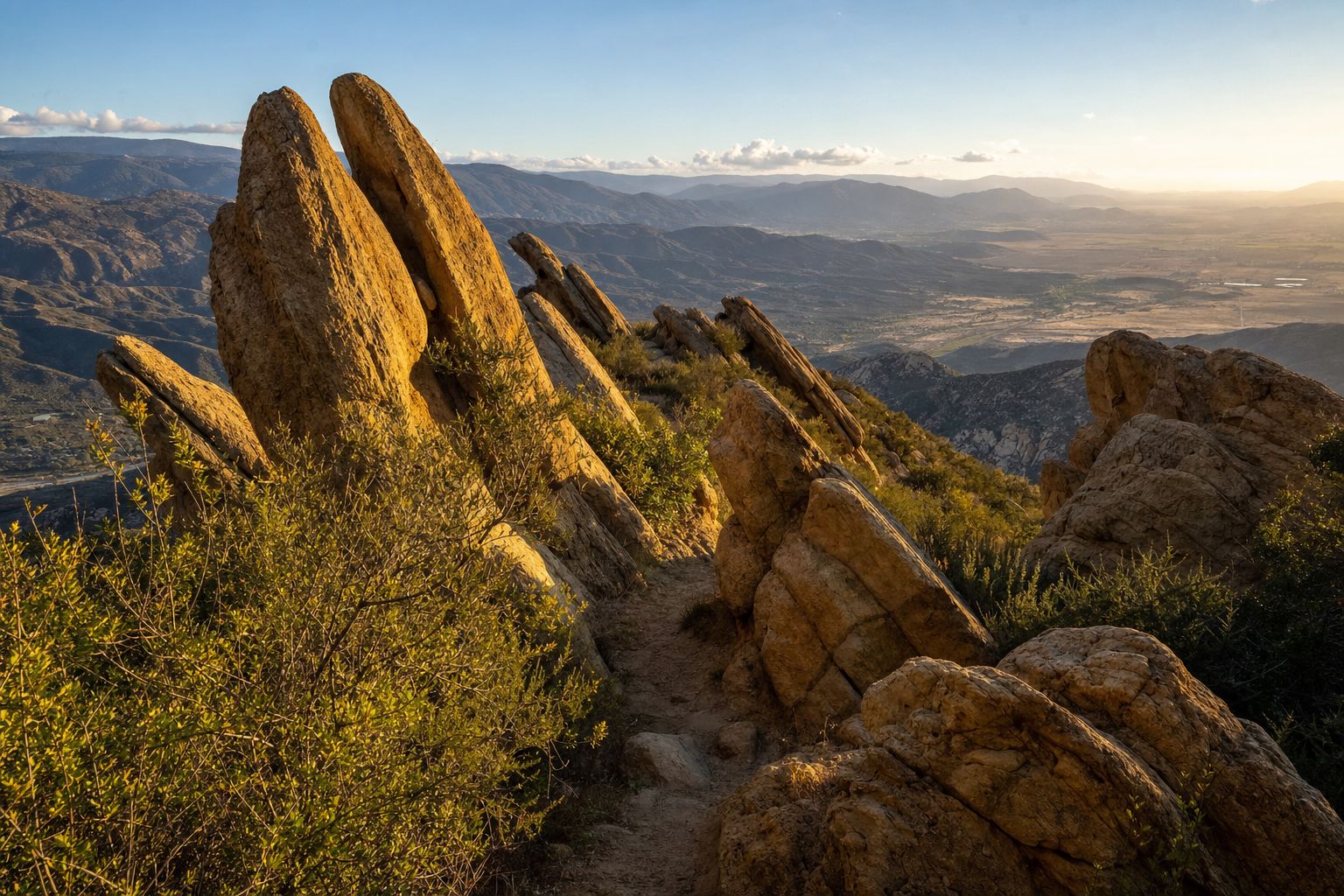
Vásquez's gang kept moving through Soledad Canyon (the boulder badlands they hid in are still called Vásquez Rocks today) before a final, almost comedic robbery at the Repetto Ranch near present-day Monterey Park: unsatisfied with the $80 the rancher had on hand, Vásquez forced him to write an $800 check "as a loan," then sent the rancher's terrified young nephew to cash it in Los Angeles. Suspicious bank staff alerted Sheriff Rowland, whose posse arrived within the hour — Vásquez escaped again, but the reward money and manhunt were now inescapable.
Capture of the Bandit at Greek George's Ranch
Vásquez's luck ran out at the ranch of Georgias "Greek George" Caralambo, a former US Army camel driver, near what is now the intersection of Fountain Avenue and Kings Road in West Hollywood. A tip — accounts differ on whether it came from a paid informant or a relative Vásquez had wronged — led Sheriff Rowland to stake out the ranch. On May 13-14, 1874, Under-Sheriff Albert Johnson led a hand-picked six-man posse that surrounded the house and took Vásquez without a shot fired. Rowland collected the $8,000 reward; Sheriff Morse, who had supplied the tip that first pointed lawmen toward the ranch, received nothing.
Trial, Execution, and the Photograph
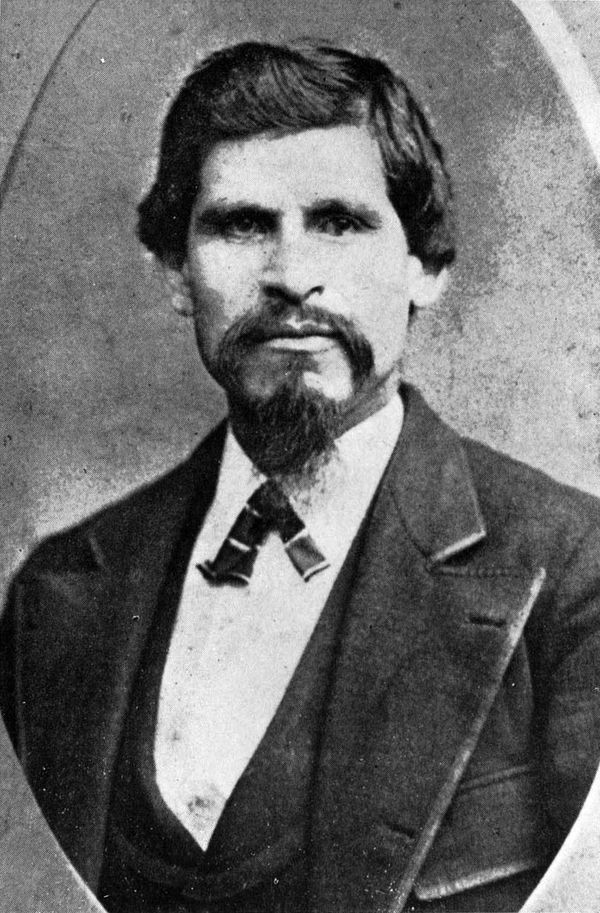
Awaiting trial, Vásquez became something of a celebrity, receiving daily visitors and, notably, posing for and personally selling autographed copies of what remains the only surviving photograph of him. His four-day murder trial for Leander Davidson's killing at Tres Pinos ended in a guilty verdict after just two hours of deliberation; Judge David Belden sentenced him to hang, and Governor Romualdo Pacheco denied a clemency appeal. This Tiburcio Vásquez outlaw career, one of the longest and best-documented of the era, ended on the gallows in San Jose on March 19, 1875.
Frequently Asked Questions
Who was Tiburcio Vásquez?
Tiburcio Vásquez (1835–1875) was a Californio bandit leader active across central and Southern California from the 1850s until his capture in 1874, responsible for a series of stagecoach, store and ranch robberies over roughly two decades.
What was the Tres Pinos robbery?
The 1873 robbery of a store at Tres Pinos in San Benito County, during which three men were killed. It triggered a major statewide manhunt that ultimately led to Vásquez’s capture the following year.
How was Tiburcio Vásquez captured?
He was captured in 1874 at a hideout in the hills near what is now West Hollywood, following a tip that led a coordinated posse to his location.
What happened to Tiburcio Vásquez after his capture?
He was tried and convicted, and hanged in San Jose in 1875.
Does a real photograph of Tiburcio Vásquez exist?
Yes — a single surviving photograph, taken while he awaited trial, is the only known photo of him. Vásquez reportedly posed for it willingly and personally sold autographed copies to visitors and admirers during his months in custody.
What led to Vásquez's capture?
An affair with Rosaria Leiva, the wife of gang member Abdon Leiva, backfired badly: her husband caught them together, surrendered to authorities, and turned informant, giving lawmen the lead that eventually resulted in a firefight at Little Rock Creek. Vásquez escaped that encounter, but a later tip led Sheriff Rowland to stake out Greek George's ranch in what is now West Hollywood, where a posse captured him on May 13-14, 1874.
What was the Coyote Holes stage robbery?
In 1874, fleeing toward the Owens Valley, Vásquez's gang robbed the Coyote Holes stage station and the Owens Valley stage itself -- whose passengers included Mortimer Belshaw, the mine owner behind Cerro Gordo's silver fortune. The strongbox held mostly worthless mining stock certificates, which a disgusted Vásquez scattered to the wind.
Why are they called Vásquez Rocks?
The rock formations in Soledad Canyon, north of Los Angeles, are named for Vásquez, who reportedly hid there with his gang during his final months of freedom in 1874. The site is now a well-known park and filming location.
More Outlaws & Frontier Figures
- Joaquín Murrieta — Active early 1850s
- Black Bart — 1875–1883 (active)