
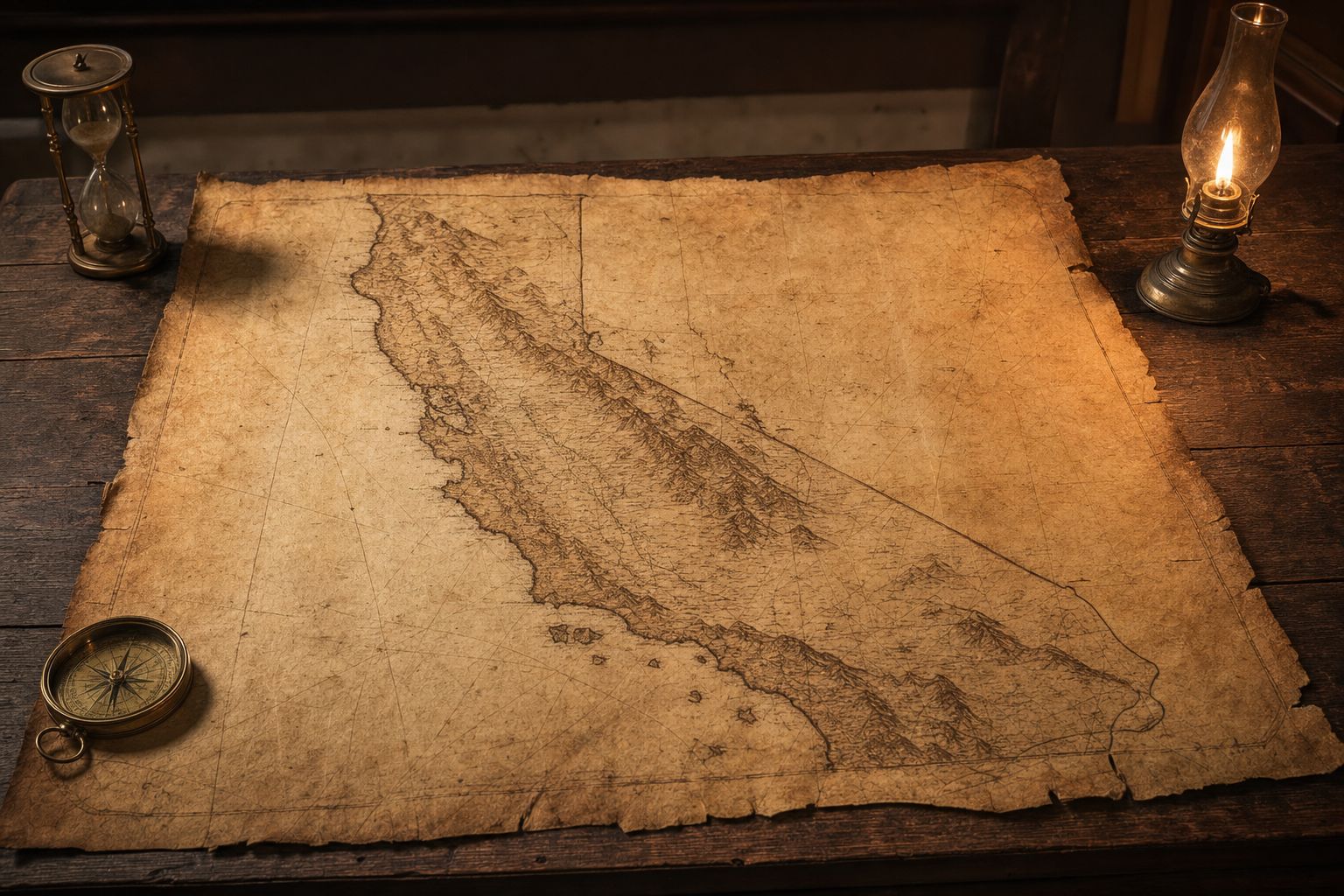
California’s story breaks into five distinct eras, each reshaping who held the land and how they lived on it. Start anywhere — every era links forward and back to the ones beside it.
What makes the boundaries between them worth drawing isn’t just convenience: each transition marks a real change of hands. Indigenous nations who had lived here for thousands of years met Spanish missionaries in 1769; Spain's colonial administrators handed the territory to Mexico in 1821; Mexican rancho families lost it to American settlers within a generation of the Bear Flag Revolt; and the Gold Rush that followed built the modern state almost from scratch in barely fifty years. None of it was a clean handoff. Each era's ending is usually the next one's opening chapter.
Indigenous California
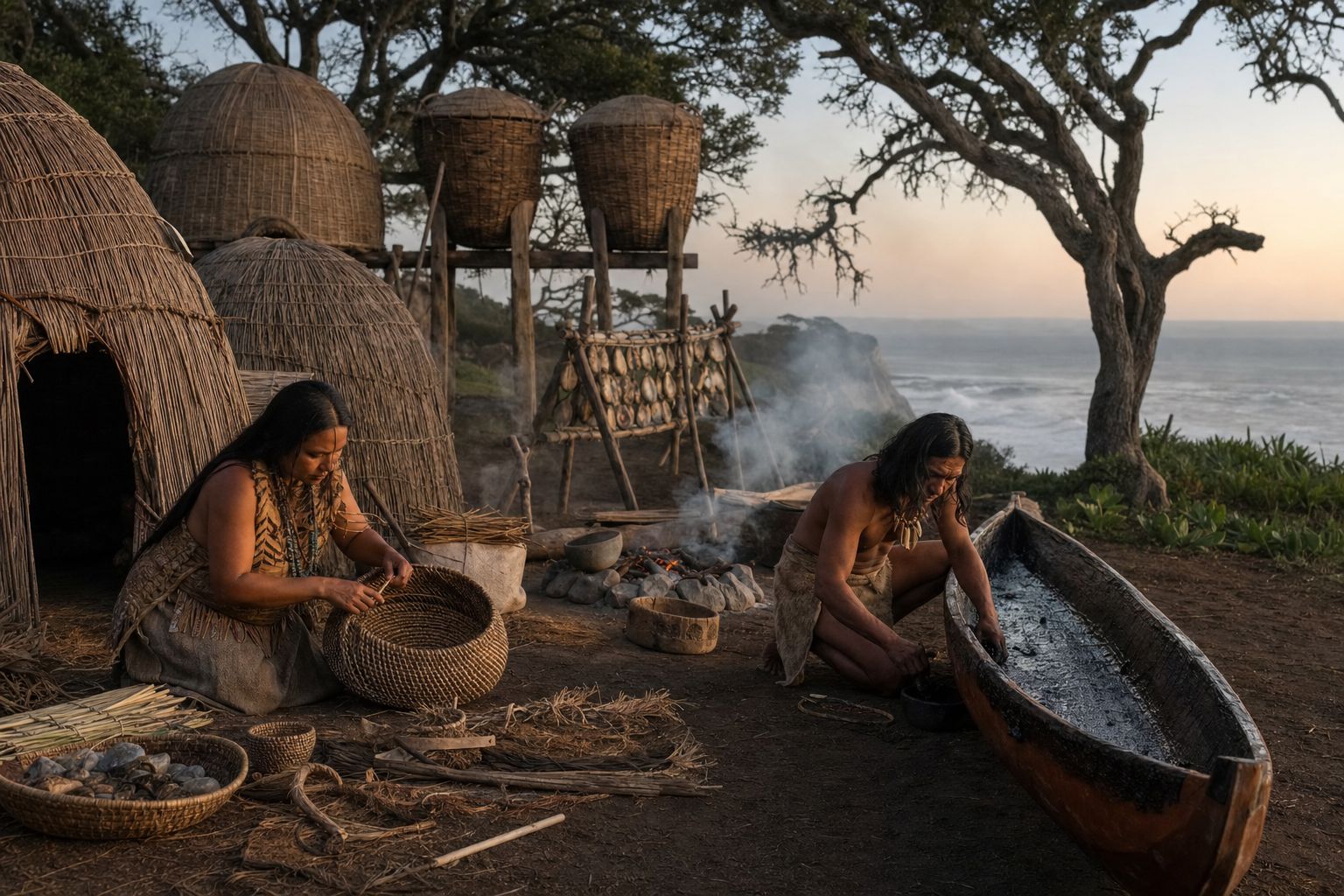
Before any European set foot on this coast, dozens of distinct nations — from the Chumash to the Yurok to the Cahuilla — had already shaped California for thousands of years.
Spanish Colonial & Mission Era
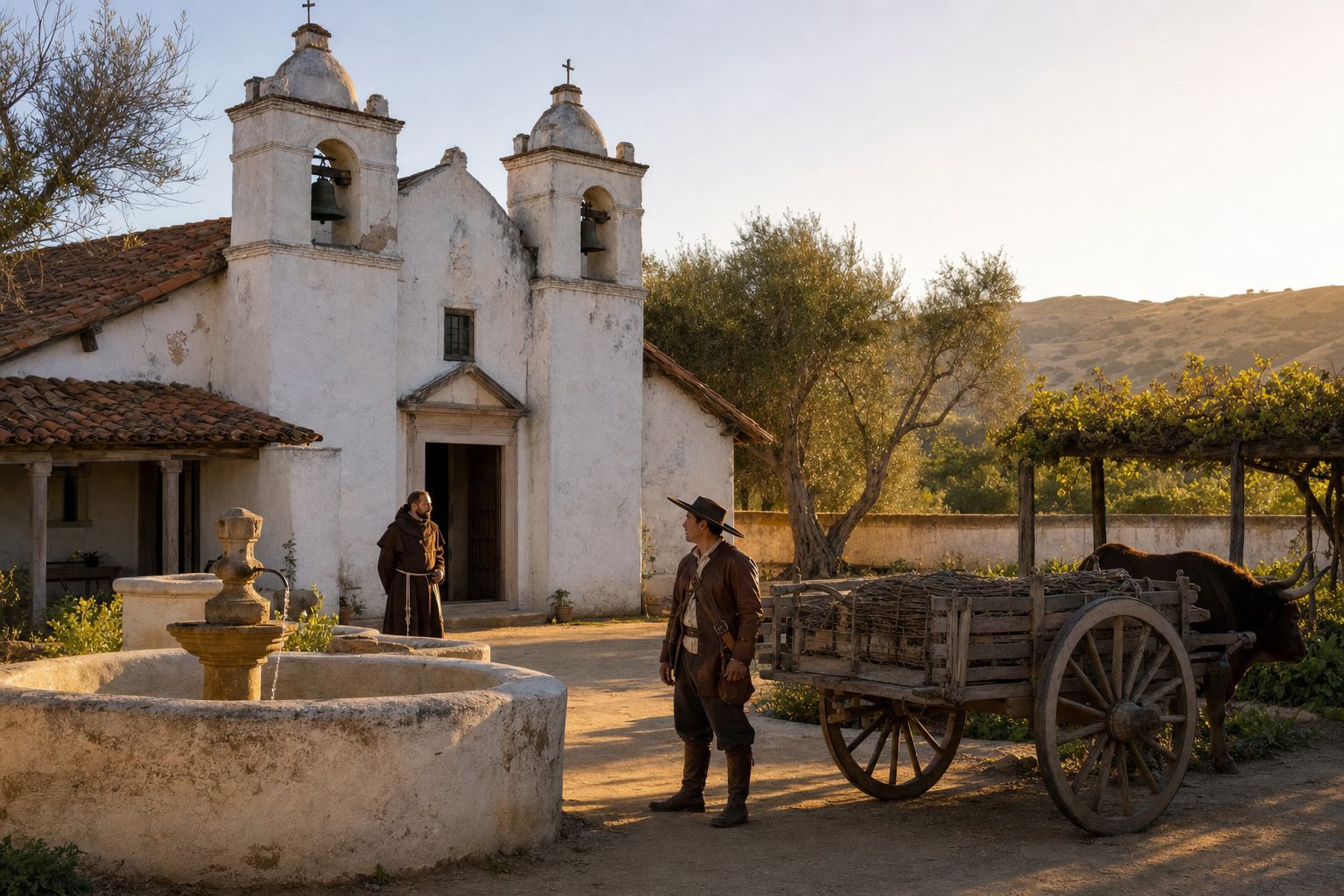
A chain of missions, presidios and pueblos strung along the coast reorders land, labor and life across Alta California under the Spanish crown.
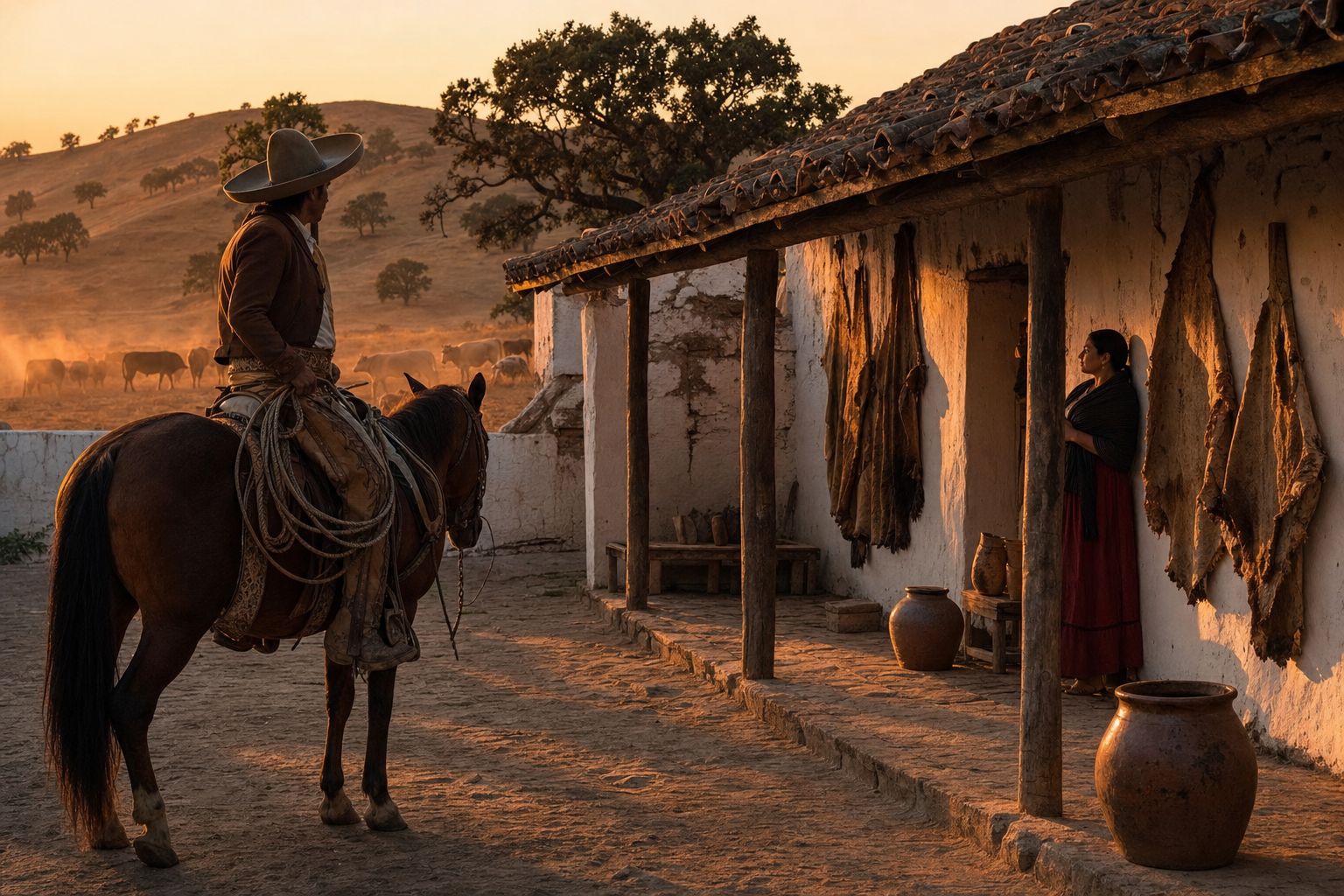
Mexican California
Independence from Spain hands California to Mexico, mission lands pass to private rancho grants, and a distinct Californio society takes root.
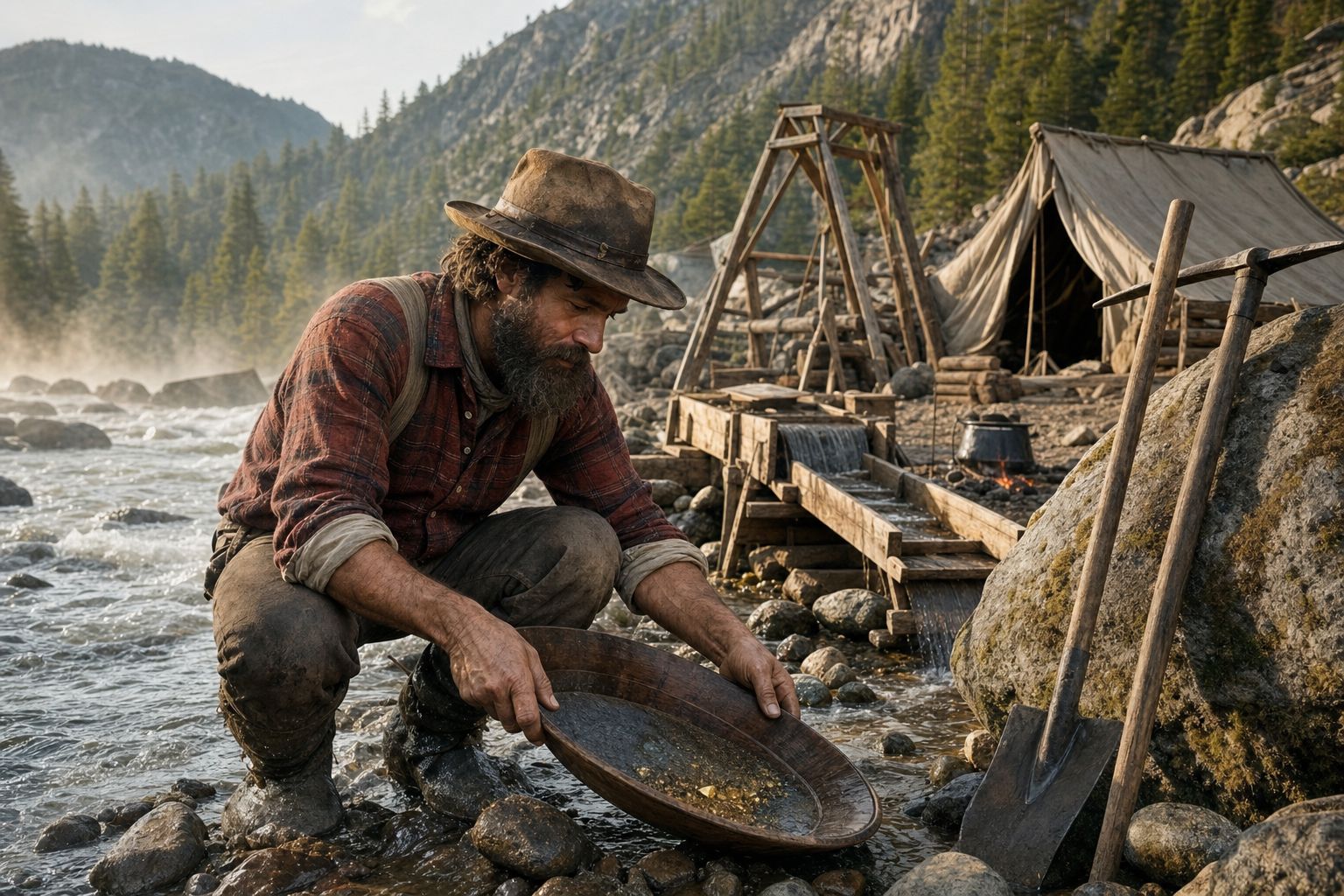
American California & the Gold Rush
The Bear Flag Revolt tips California into American hands just as gold at Sutter’s Mill triggers the largest mass migration in the country’s history, leaving ghost towns and outlaw legends behind it.
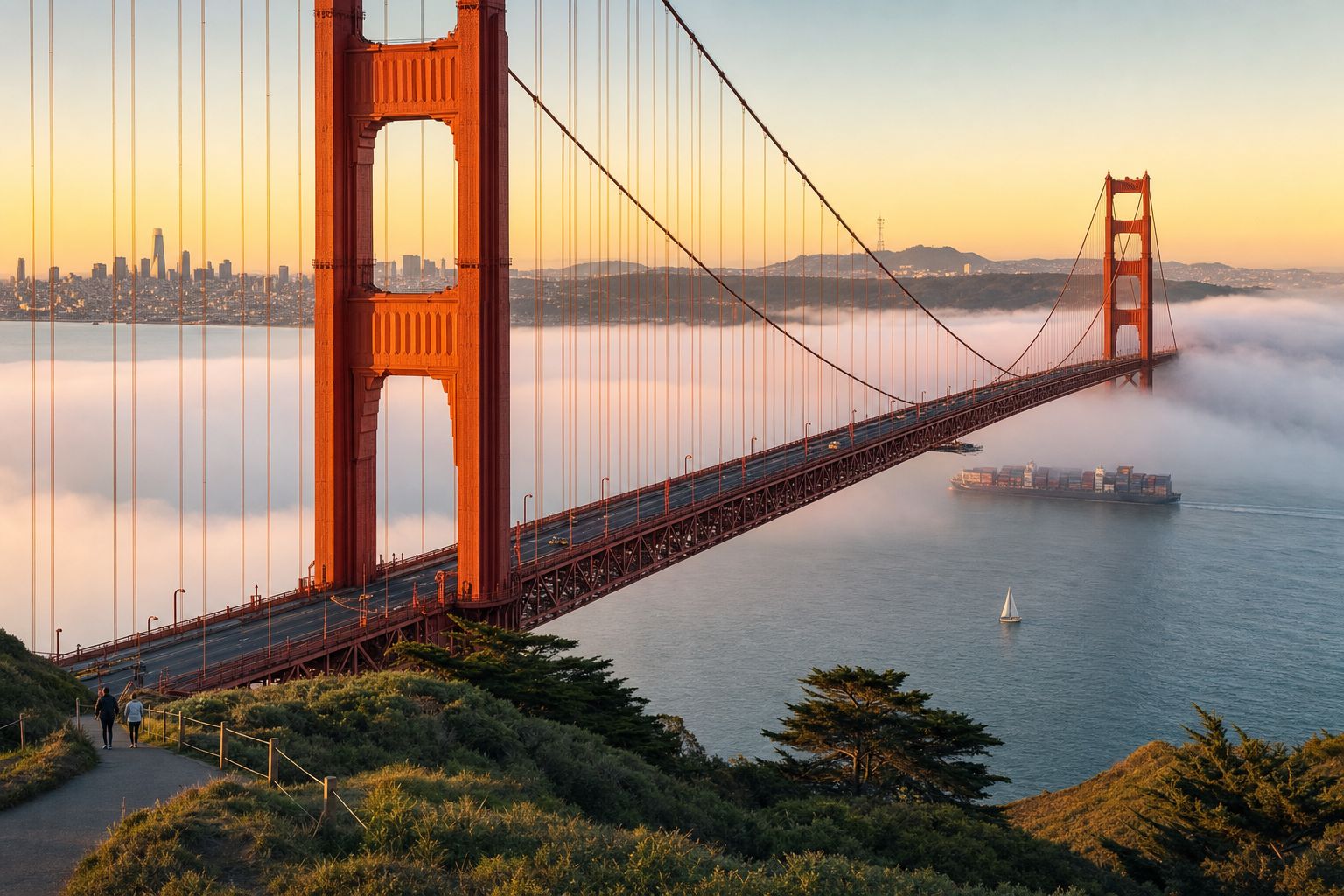
Modern California
From the 1906 earthquake to the aerospace and tech booms, twentieth-century California becomes the state the rest of the world tries to imagine.
Reading the Eras in Order
These five eras are presented in chronological order, and reading them in sequence gives the fullest picture of how one period's ending became the next one's opening move: Spanish mission land grants becoming Mexican rancho grants, and rancho grants giving way to American statehood within a generation. Each page also stands on its own — if you already know which period you're researching, its page covers that era completely without assuming you've read the others first.
The ghost towns, outlaws and historic parks covered elsewhere on this site each belong to one of these five periods specifically. Dogtown and the rest of the Gold Rush ghost towns sit inside American California, and Tiburcio Vásquez's career runs almost entirely within it too, while Sutter's Fort belongs to the Mexican California period that came just before. Reading an era page first, then following its links out to the specific places and people it produced, is the most direct path through the rest of this site.
If you're researching a specific place or person rather than a whole era, the fastest path usually runs the other direction: start from wherever that subject already lives on this site, whether that's a ghost town, an outlaw, or a historic park, and follow its own link back to the relevant era page for the fuller historical context around it.
Frequently Asked Questions
How many eras of California history does this site cover?
Five: Indigenous California (pre-1769), the Spanish Colonial & Mission Era (1769–1821), Mexican California (1821–1846), American California & the Gold Rush (1846–1900), and Modern California (1900–present).
Do I need to read the eras in order?
No — each era page stands on its own and covers its period completely, but reading them in sequence gives the fullest picture of how one era's ending became the next one's opening move.
How are the boundaries between eras decided?
Not at a fixed number of years, but at a real change of hands — Spain's arrival in 1769, Mexican independence in 1821, the Bear Flag Revolt and American statehood, and so on — since that's where the land and the people governing it actually shifted.
Where do the ghost towns, outlaws, and historic parks on this site fit into these eras?
Each one belongs to a specific era. The Gold Rush ghost towns and Tiburcio Vásquez's career sit inside American California, while Sutter's Fort belongs to the Mexican California period just before it.