

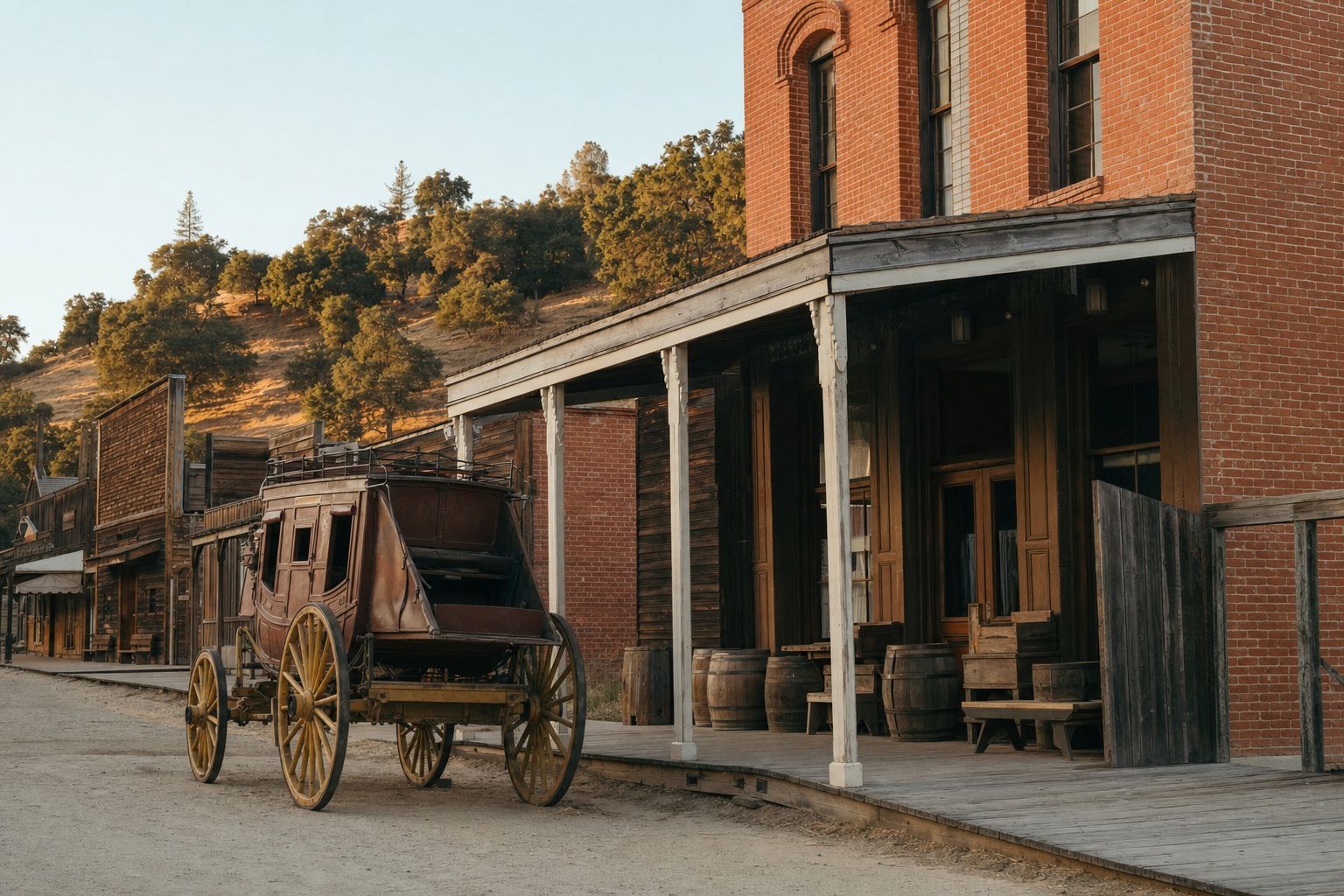
California’s State Historic Parks preserve some of the physical evidence behind the eras covered elsewhere on this site: actual buildings, fortifications and landscapes, rather than just the historical record. This directory covers four of them, each tied to a different chapter of the state’s history.
The four span three different colonial powers and three different economic engines: Fort Ross was Russia's southernmost foothold in North America, built for the fur trade; Sutter's Fort was the Mexican-era headquarters that unintentionally became the doorstep of the Gold Rush; Columbia is a Gold Rush boomtown that, unlike most, never burned down or fully emptied out; and Malakoff Diggins is the physical scar left by the most destructive mining technique the Gold Rush ever produced.
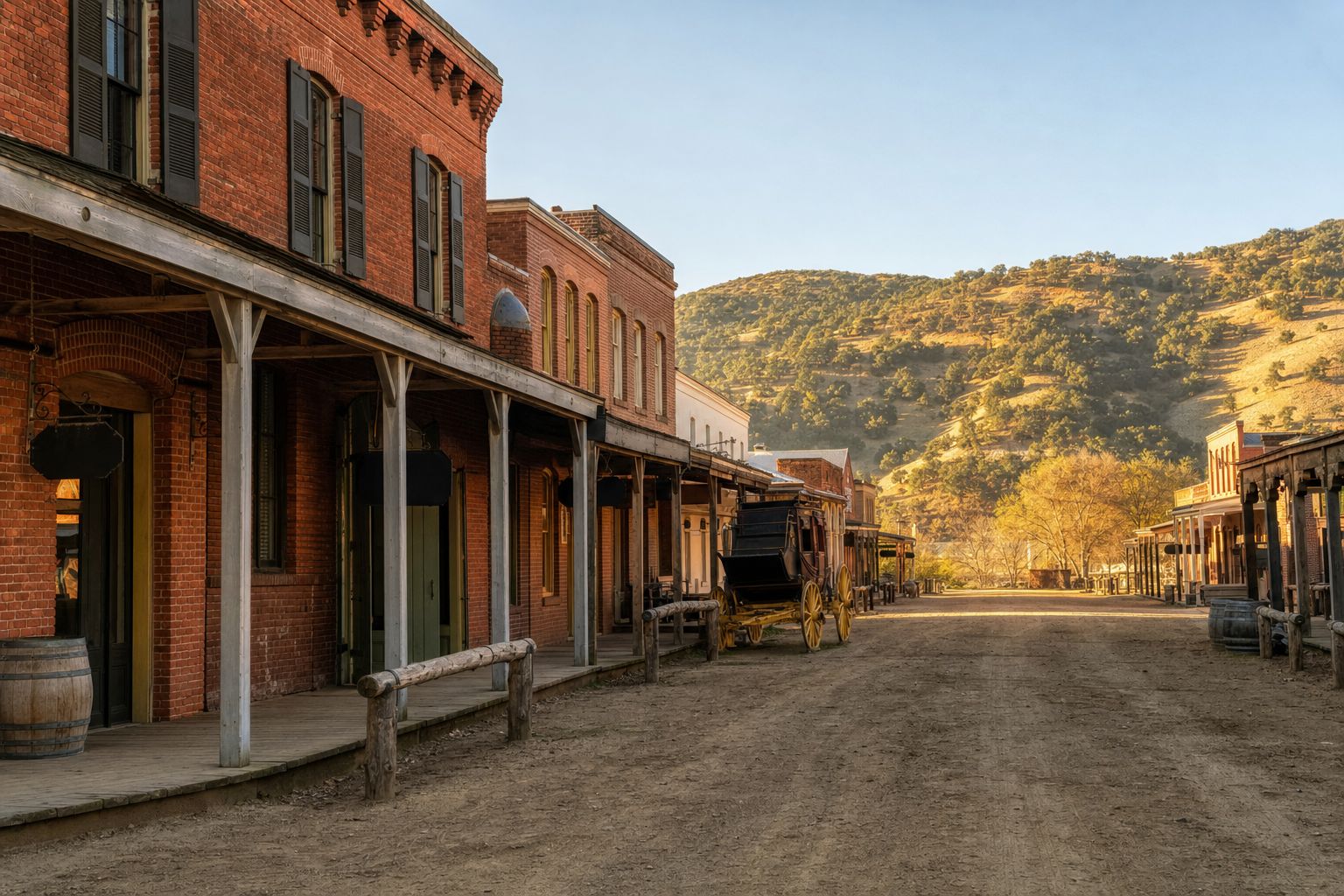
Columbia State Historic Park
A Gold Rush boomtown whose brick and wood architecture survived largely intact, unlike most of its contemporaries.
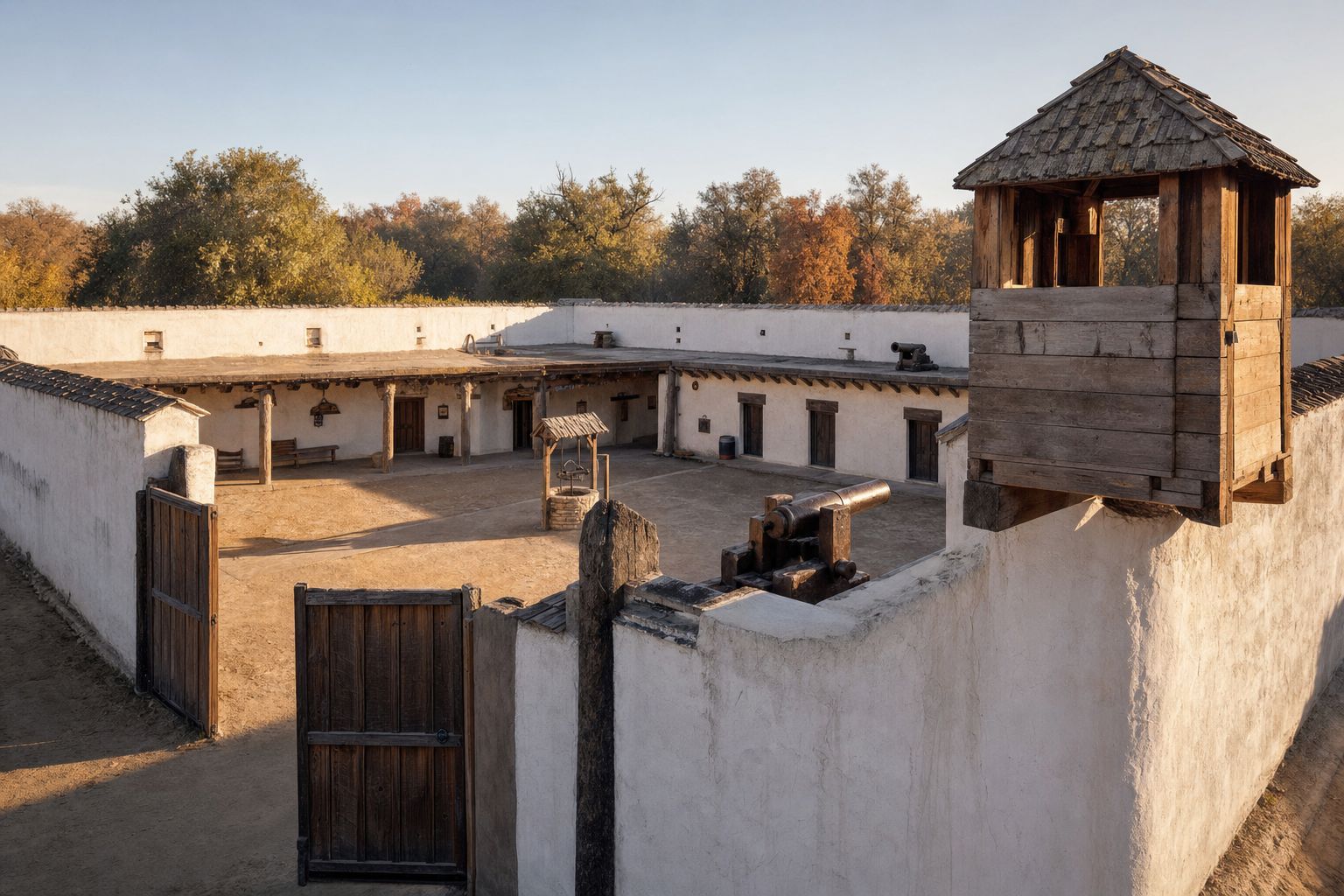
Sutter's Fort State Historic Park
John Sutter's agricultural colony headquarters, later the destination for early overland emigrants and the doorstep of the Gold Rush.
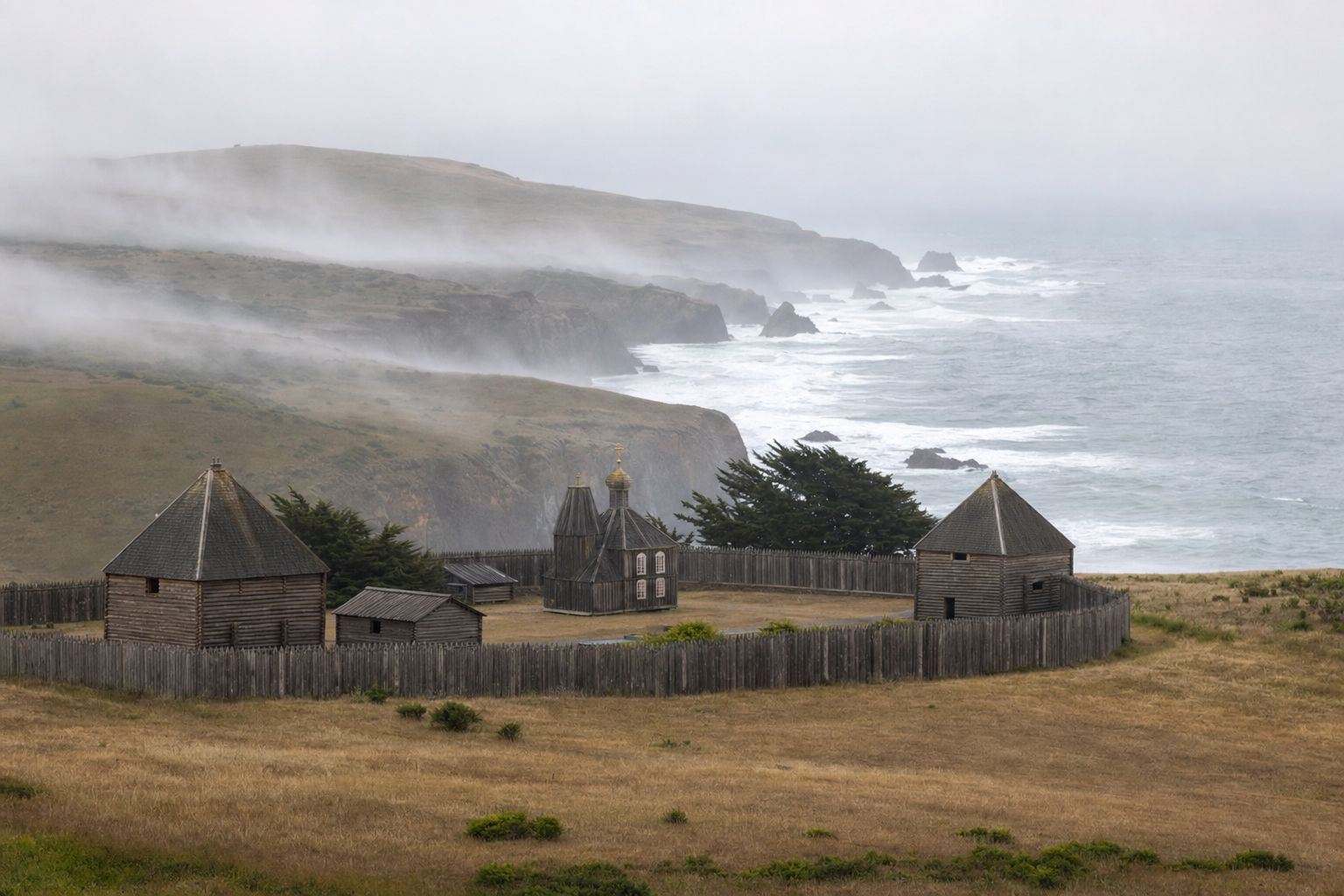
Fort Ross State Historic Park
A Russian fur-trading outpost on the Sonoma coast — the furthest south Russia’s American colonial ambitions ever reached.
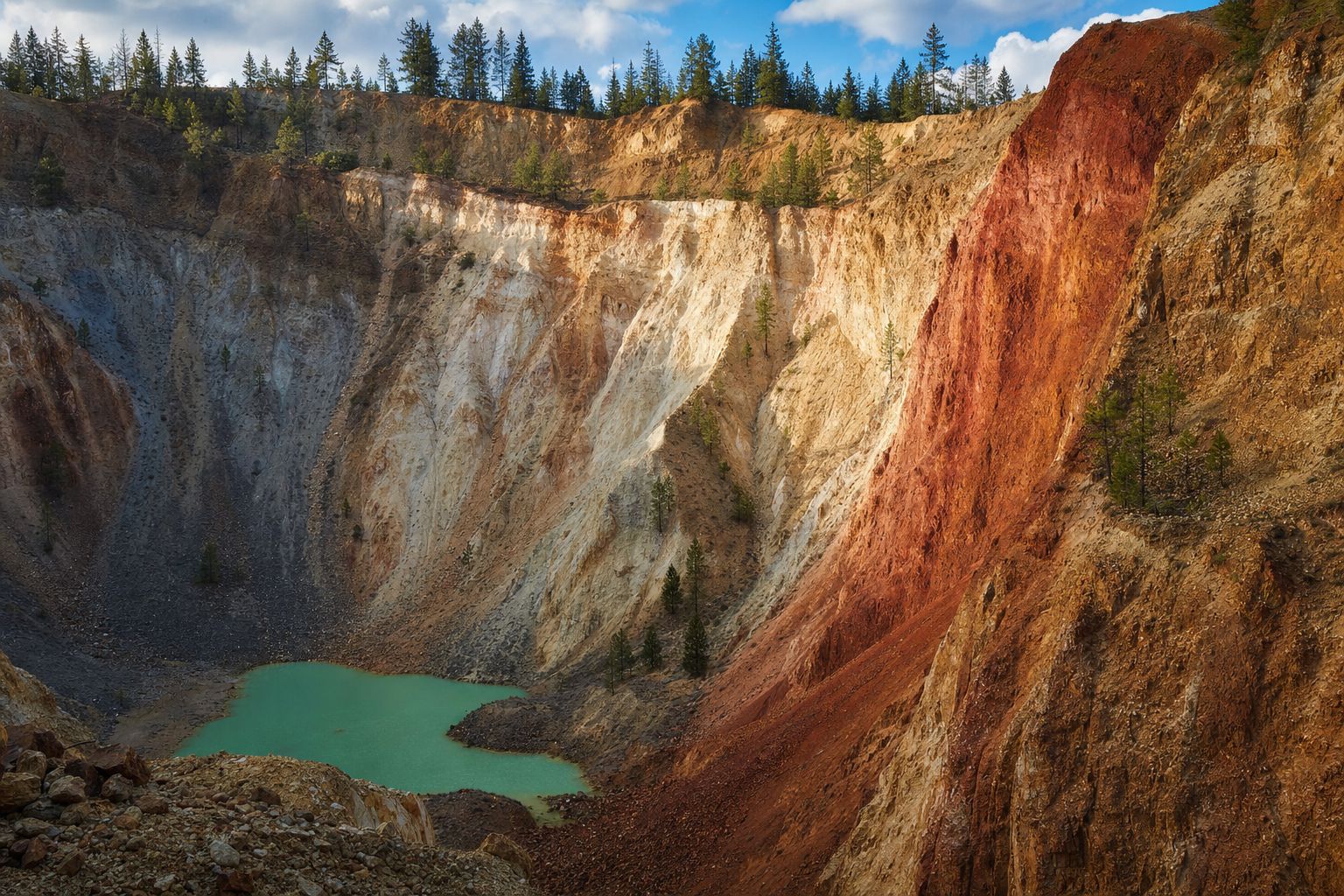
Malakoff Diggins State Historic Park
The site of California’s largest hydraulic gold mine — and the landmark 1884 court decision that shut the practice down.
What "State Historic Park" Actually Means
Not every historic site in California carries this designation. A property becomes a State Historic Park through California State Parks' own formal process, which requires documented historical significance and an ongoing preservation commitment that goes well beyond marking a spot with a plaque. That commitment is exactly why the four sites covered here look the way they do: restored, staffed, and open to visitors on a regular schedule, rather than left to decay or quietly rebuilt by private owners.
It is also the clearest line between this directory and the Ghost Towns covered elsewhere on this site. Several of those towns were every bit as historically significant as the parks here, but never received the same formal state designation or ongoing preservation investment, which is a large part of why one group is still standing and staffed today while the other survives mostly as foundations and a name on a map.
Each of the four is also a genuinely different kind of place to actually visit, on the ground. Fort Ross is a reconstructed wooden stockade on a windswept coastal bluff; Sutter's Fort sits landlocked in the middle of modern Sacramento; Columbia is a living town you can walk through rather than a static exhibit behind glass; and Malakoff Diggins is closer to a scarred, still-visible landscape than a conventional building-centered park at all, since hydraulic mining reshaped the earth itself rather than leaving standing structures behind.
That variety is partly the point of covering all four together rather than picking one representative example: a colonial fur-trading outpost, a Mexican-era agricultural colony, a Gold Rush boomtown, and an industrial mining scar don't share much in common on the surface, but they're linked by the same formal preservation process and by how directly each lets a visitor stand inside a different chapter of the state's history rather than just read about it afterward.
Visiting more than one of the four also makes the state's overall timeline easier to hold onto than reading about any single site does on its own, since walking from a Russian coastal outpost to a Mexican-era fort to a Gold Rush main street covers roughly a century of hands changing in a handful of afternoons.
Frequently Asked Questions
What makes a site an official California State Historic Park rather than just an old building?
A formal process through California State Parks that requires documented historical significance and an ongoing preservation commitment — restoration, staffing, and regular public access — not just a plaque marking the spot.
Which of these four parks is the oldest?
Fort Ross, built by Russian colonists in 1812 as their southernmost foothold in North America — nearly three decades before Sutter's Fort (1839–1841).
How is Malakoff Diggins different from the other three parks?
It preserves a scarred landscape rather than standing buildings. Hydraulic mining — the most destructive mining technique the Gold Rush produced — reshaped the earth itself at Malakoff Diggins, rather than leaving behind fortifications or a townscape the way Fort Ross, Sutter's Fort, and Columbia do.
What's the difference between these Historic Parks and the Ghost Towns covered elsewhere on this site?
Formal state designation and ongoing investment. Several ghost towns nearby were every bit as historically significant, but never received the same preservation commitment, which is why these four parks are staffed and open on a regular schedule while the ghost towns survive mostly as ruins or a name on a map.