

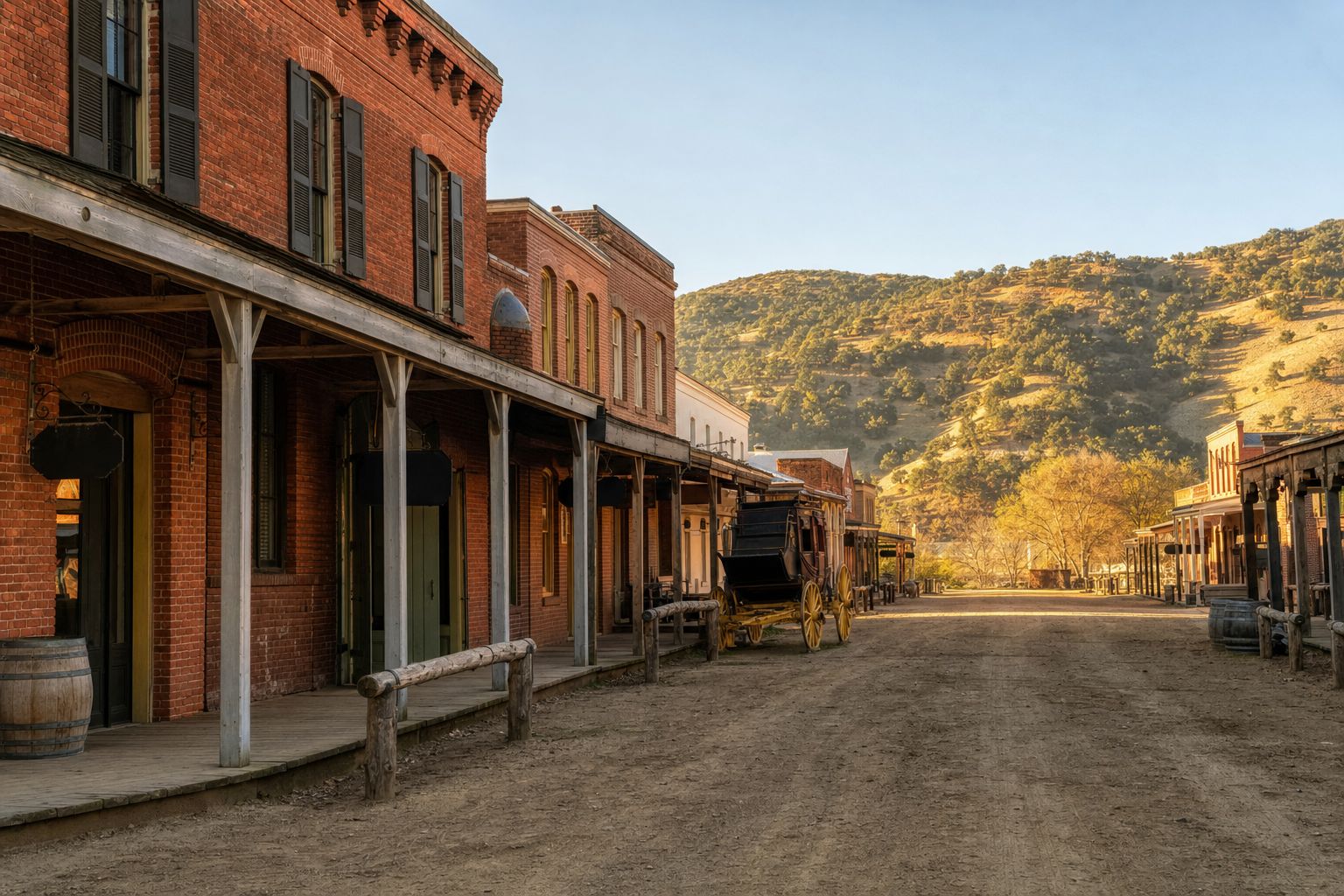
Most Gold Rush boomtowns either burned down, were abandoned, or were quietly dismantled for building materials elsewhere. Columbia is a rare exception: enough of its original brick and wood architecture survived that the whole town could be preserved essentially as it stood.
The Gem of the Southern Mines
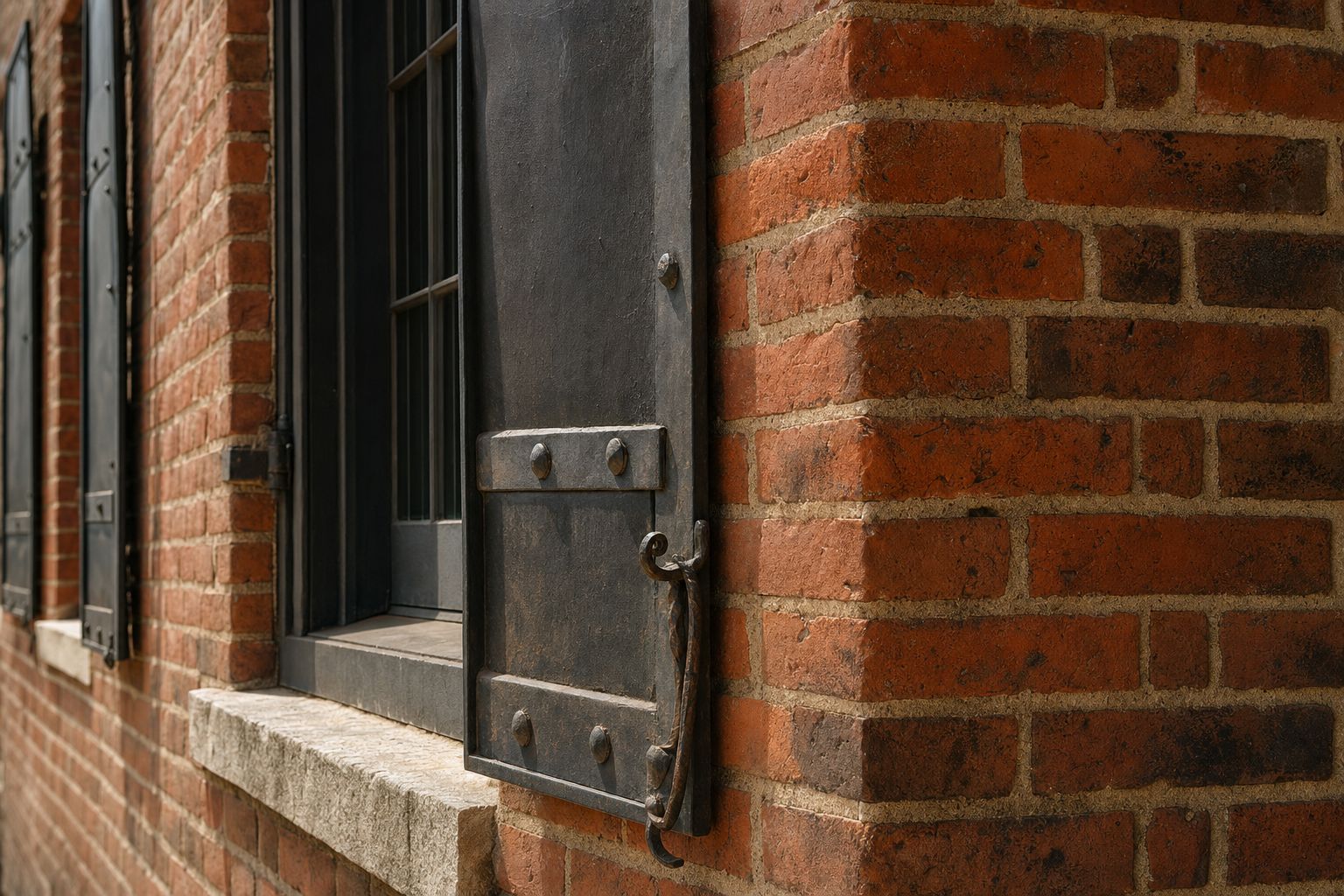
Gold was discovered at Columbia in March 1850, when the Hildreth party struck it rich at what they called "Hildreth's Diggings," and the town grew rapidly into one of the largest and richest settlements in the southern Sierra gold country, well-known enough in its own time to earn the nickname "Gem of the Southern Mines." Unlike wood-frame boomtowns prone to catastrophic fire, many of Columbia’s buildings were constructed of brick with iron shutters, a fire-resistance choice that would prove decisive for the town’s later preservation.
The Second-Largest City in California
By 1853, Columbia had grown fast enough to rank as one of California's largest settlements: estimates put its population between 25,000 and 30,000, briefly making it the state's second-largest city after San Francisco. Between 1850 and the early 1900s, the district yielded an estimated $150 million in gold, a sum substantial enough that some of it is credited with helping finance the Union war effort during the Civil War.
Surviving Where Others Didn’t
As the readily accessible gold ran out and the town’s population declined through the later nineteenth century, Columbia avoided the fate of complete abandonment or destruction that erased so many of its contemporaries. Enough of its brick commercial buildings and wooden residences survived (structurally, not just as ruins) that by the twentieth century Columbia stood out as an unusually complete physical record of a Gold Rush town.
Becoming a State Historic Park
California designated Columbia a State Historic Park in 1945, among the earliest such preservation efforts in the state. Today it operates with a living-history approach (costumed interpretation, a working stagecoach, and demonstrations of period trades) rather than the "look but don’t touch" treatment given to more fragile sites. Columbia's 1850s boom belongs to the same wave of Sierra gold discoveries covered in full on our American California & the Gold Rush era page.
A Working Town, Not a Museum Diorama
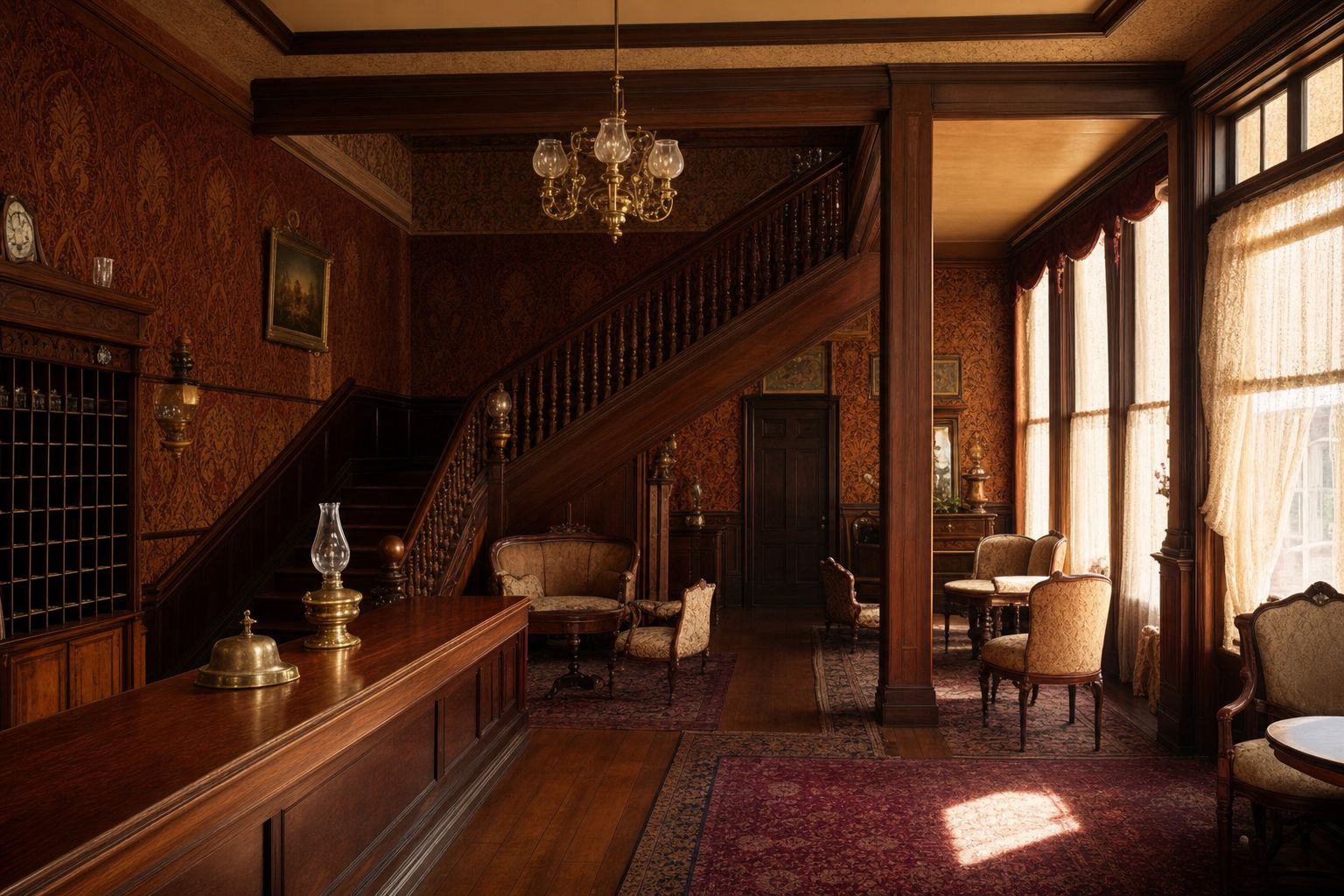
More than 30 restored buildings still line Columbia's Main Street: a schoolhouse, a bank, a newspaper office, saloons, the old Wells Fargo Express building, and both the Fallon and City hotels, the latter of which still houses overnight guests today. A working blacksmith shop, gold-panning demonstrations, stagecoach rides and a restored 1880s theater keep the town functioning as an inhabited open-air museum rather than a static exhibit, and the annual four-day "Columbia Diggins" reenactment each May, documented in California State Parks' own park history, recreates the town at the height of its 1852 boom.
What sets Columbia apart from almost every other Gold Rush boomtown covered on this site is completeness rather than fame or fortune. It was never the richest strike in the southern Sierra, and by the 1850s it was already being outproduced by larger districts elsewhere in the gold country. What it had, and most of its rivals didn't, was enough surviving brick-and-iron construction to preserve as a functioning whole rather than a scattered handful of ruins or foundations. That, more than the size of its boom, is why the state chose it as one of its earliest historic parks in 1945, and why a visitor today can walk down a Gold Rush main street rather than read about one on a plaque.
Frequently Asked Questions
Why is Columbia called the "Gem of the Southern Mines"?
The nickname dates to the town’s own Gold Rush-era heyday, reflecting its status as one of the largest and richest settlements in the southern Sierra Nevada gold country after gold was discovered there in March 1850.
How big did Columbia get during the Gold Rush?
By 1853, estimates put Columbia's population between 25,000 and 30,000, briefly making it California's second-largest city after San Francisco. The district produced an estimated $150 million in gold between 1850 and the early 1900s.
Why did Columbia survive when so many Gold Rush towns didn’t?
Many of Columbia’s buildings were constructed of brick with iron shutters rather than wood alone, a fire-resistance choice that helped the town avoid the catastrophic fires that destroyed many contemporary boomtowns, leaving enough original structure intact for later preservation.
When did Columbia become a State Historic Park?
Columbia was designated a California State Historic Park in 1945, one of the earliest such preservation efforts in the state.
What can visitors do at Columbia State Historic Park today?
The park uses a living-history approach, including costumed interpretation, a working stagecoach ride, and demonstrations of period trades, rather than treating the town purely as a static historic ruin.
How many original buildings survive at Columbia?
More than 30, including a schoolhouse, bank, newspaper office, saloons, the old Wells Fargo Express building, and the Fallon and City hotels — the City Hotel still houses overnight guests today.
More Historic Parks
- Sutter's Fort State Historic Park — Sacramento
- Fort Ross State Historic Park — Sonoma Coast
- Malakoff Diggins State Historic Park — Nevada County