

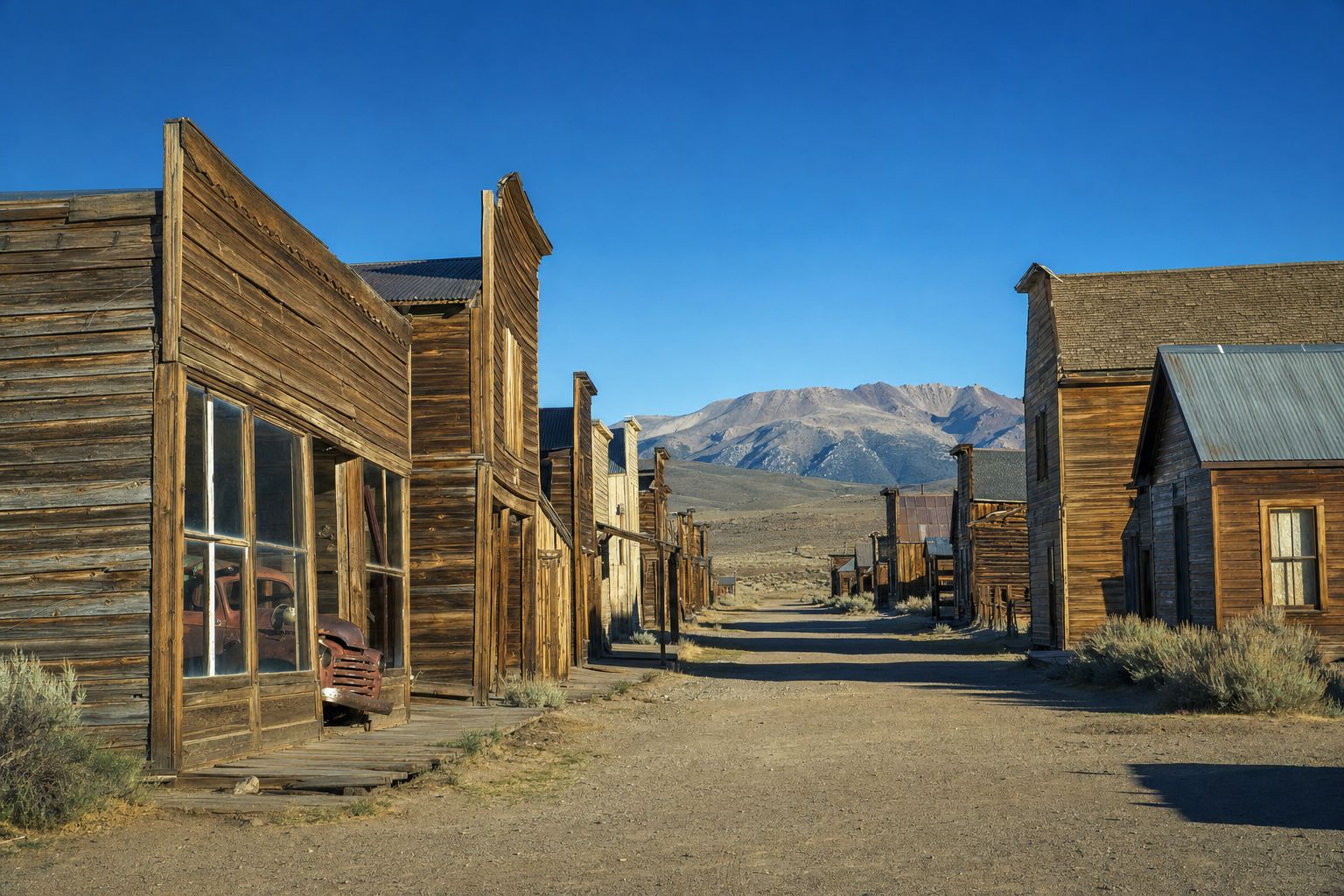
If most people picture one California ghost town, it’s Bodie. High on a windswept plateau in the eastern Sierra, it went from a minor camp to a boomtown of several thousand people in under two decades — and from boomtown to near-total abandonment almost as quickly, leaving behind one of the most intact collections of Gold Rush-era buildings anywhere in the American West.
From a Minor Strike to a Boomtown
Gold was first found near Bodie in 1859, in a strike small enough that the town took years to amount to much. That changed after 1876, when a cave-in at the Standard Company’s mine exposed a substantial gold-bearing ore body. Within a few years Bodie had grown from a handful of prospectors into a boomtown that, by around 1879–1880, held an often-cited population estimate in the thousands; accounts and later historical estimates vary, but all describe a town large enough to support dozens of saloons, its own stock exchange, and a reputation for lawlessness summed up in the era’s saying, "goodbye God, I’m going to Bodie."
That reputation earned Bodie its own nickname for the type of man it produced: a "Bad Man from Bodie" became a recognized phrase across the West for a ruffian or gunslinger, invoked seriously enough that it once turned up as a courtroom defense: a San Francisco defendant argued he'd been unfairly saddled with the label and it had wrecked his standing in the community.
Historian Roger McGrath's 1984 study Gunfighters, Highwaymen, and Vigilantes, a case study of Bodie and the nearby Nevada camp of Aurora, complicates the popular image somewhat: McGrath argues the mining frontier's violence was largely confined to willing combatants (miners, gamblers and gunmen fighting each other) rather than the random, everywhere danger the legend implies, with functioning community and law enforcement controls existing alongside the gunfights.
The Decline
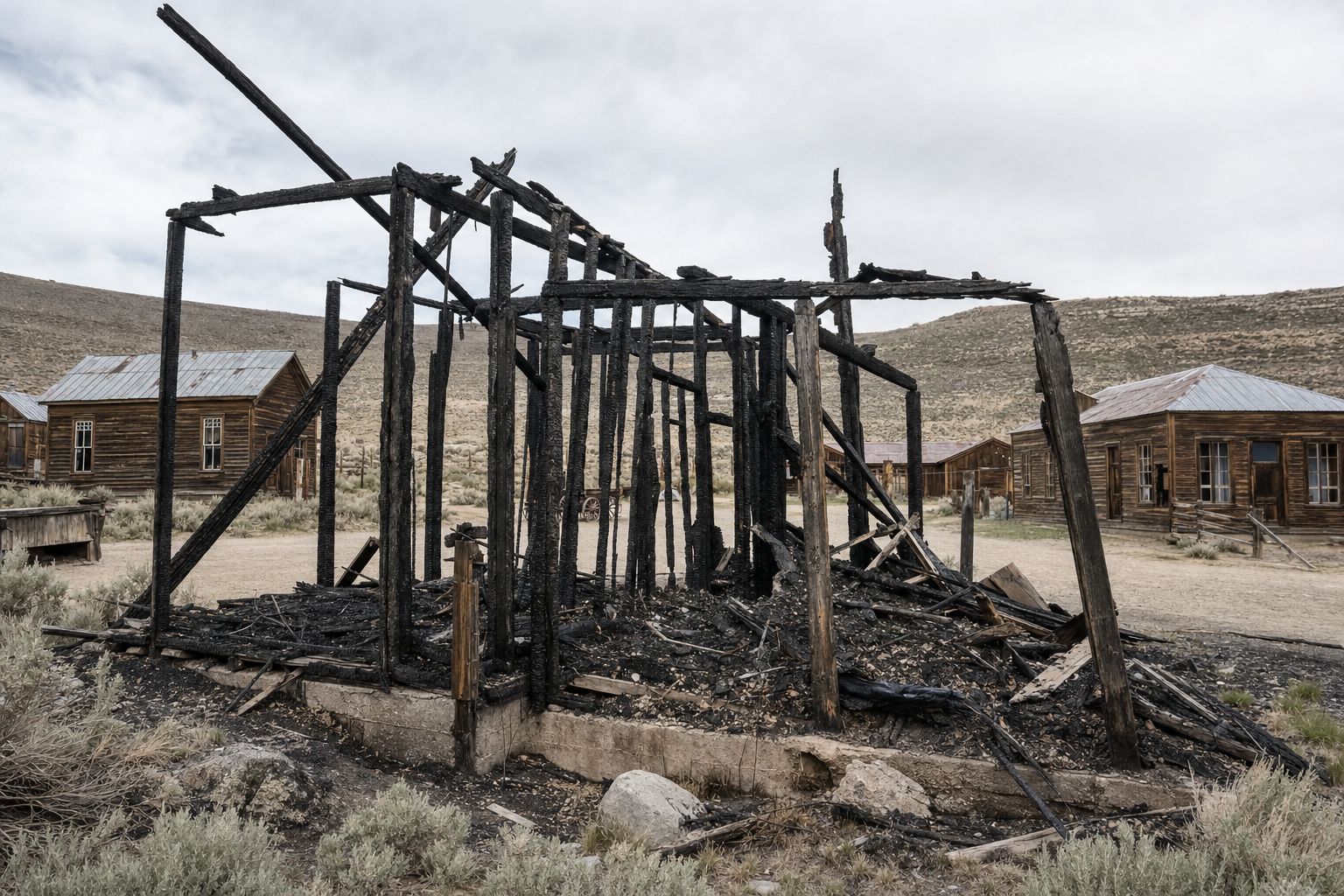
Bodie’s boom, like most, didn’t last. As the richest ore was worked out through the 1880s and 1890s, population and investment steadily drained away toward newer strikes elsewhere. A fire in 1892 had already taken a toll, and by the early twentieth century Bodie was a fraction of its former size. A second, far more devastating fire in 1932 — reportedly started by a young boy playing with matches — destroyed roughly 95% of what remained standing.
Between the two fires, Bodie went from around 2,000 structures at its peak to the fewer than 200 that survive today, of which just over 100 are open to visitors. It's a small fraction of the original town — but still one of the largest collections of intact Gold Rush-era buildings anywhere in California.
Preserved in Arrested Decay
What makes Bodie unusual isn’t that it emptied out (many mining towns did) but how it was preserved afterward. The site became a California State Historic Park in 1962 and a National Historic Landmark, maintained under a policy of "arrested decay": buildings are structurally stabilized to keep them from collapsing, but not restored or refurnished beyond what survived. Many interiors still hold original furniture, stocked shelves and personal belongings left behind by the last residents, giving Bodie a level of authenticity rare among preserved historic sites.
Frequently Asked Questions
How big did Bodie get at its peak?
Bodie’s peak, around 1879–1880, is often cited in the thousands of residents, though exact figures vary between historical accounts. It was large enough to support dozens of saloons, its own stock exchange, and a well-documented reputation for lawlessness.
Why did Bodie become a ghost town?
As the richest ore bodies were worked out through the 1880s and 1890s, mining investment and population steadily moved on to newer strikes elsewhere, and two fires (in 1892 and a far larger one in 1932) destroyed most of what remained of the commercial district.
How many buildings are left standing at Bodie?
Fewer than 200 survive today out of roughly 2,000 that once stood, and just over 100 of those are open to visitors, still one of the largest collections of intact Gold Rush-era buildings anywhere in California, even at a fraction of the town's original size.
What does "arrested decay" mean at Bodie?
It’s the preservation policy used at Bodie State Historic Park: buildings are structurally stabilized to prevent further collapse, but not restored, repainted or refurnished beyond what genuinely survived — many interiors still hold original stocked shelves and furniture.
When did Bodie become a State Historic Park?
Bodie became a California State Historic Park in 1962 and is also designated a National Historic Landmark.
Can you still visit Bodie today?
Yes — Bodie State Historic Park is open to visitors, though its remote, high-elevation location means access can be seasonal and weather-dependent; checking current park conditions before visiting is worthwhile.
What was a "Bad Man from Bodie"?
A recognized phrase across the 19th-century West for a ruffian or gunslinger, drawn directly from Bodie's reputation for lawlessness. It carried enough weight that a San Francisco defendant once cited being unfairly labeled one as damage to his own reputation, in court.
More Ghost Towns
- Dogtown — Butte County, Sierra Nevada foothills
- Calico — San Bernardino County, Mojave Desert
- Cerro Gordo — Inyo County, Inyo Mountains
- Randsburg — Kern County, Mojave Desert
- Stirling City — Butte County, Sierra Nevada foothills