

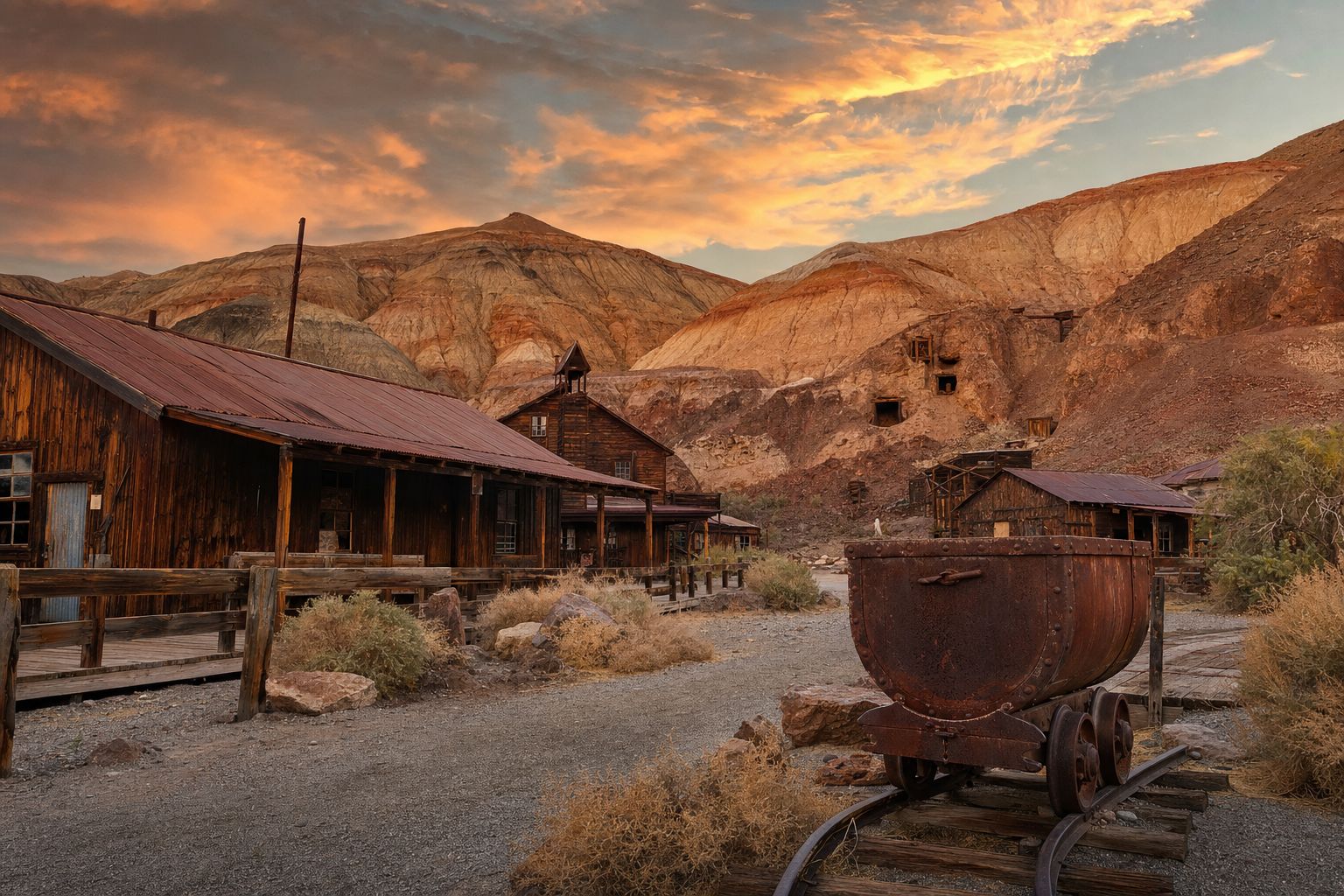
Calico sits in the striped, mineral-streaked hills of the Mojave Desert northeast of Barstow, a town that boomed not once but twice, first on silver and then on borax, before emptying out almost completely by the early twentieth century.
Silver in the Calico Hills
Silver was discovered in the hills above Calico in 1881, and the town that grew up around the strike quickly became one of the richest silver-mining districts in California through the 1880s. At its height, Calico supported several thousand residents, multiple mines, and enough infrastructure to function as a genuine town rather than a temporary camp.
The Silver King and a Town of 3,500
The richest single strike was the Silver King Mine, financed by John C. King (at the time, the sheriff of San Bernardino County) and sold on to San Francisco investors in July 1882 for $300,000. Consolidation of the Silver King and dozens of smaller claims under that outside capital made mining far more efficient, and by 1884 state mineralogists reported that Calico alone accounted for nearly 80% of San Bernardino County’s silver output, which was itself 70% of the entire state’s production that year.
At its peak, Calico held around 3,500 residents and more than 500 active mining claims. Over roughly three decades of operation, the district produced an estimated $86 million in silver and $45 million in borax — figures that place Calico among the more productive mining districts in California history, not merely a picturesque ruin.
A Second Boom: Borax
When silver prices collapsed in the 1890s (driven in large part by federal monetary policy changes affecting silver’s value), Calico’s first boom ended. A second one followed almost immediately: nearby borax deposits, worked by the Pacific Coast Borax Company, kept the town economically active into the early 1900s even as the silver mines shut down. By around 1907, though, both the silver and borax operations that had sustained Calico were largely exhausted, and the town’s population drained away.
Restoration and a Second Life
Unlike Bodie’s arrested-decay approach, Calico was actively restored rather than simply preserved. Walter Knott (founder of Knott’s Berry Farm, who had family ties to the area) led a restoration effort in the 1950s that rebuilt and stabilized much of the town for public visitation. San Bernardino County acquired Calico as a regional park in 1966, and it now operates as a historic tourist attraction rather than an untouched ruin.
Dorsey, the Mail-Carrying Dog
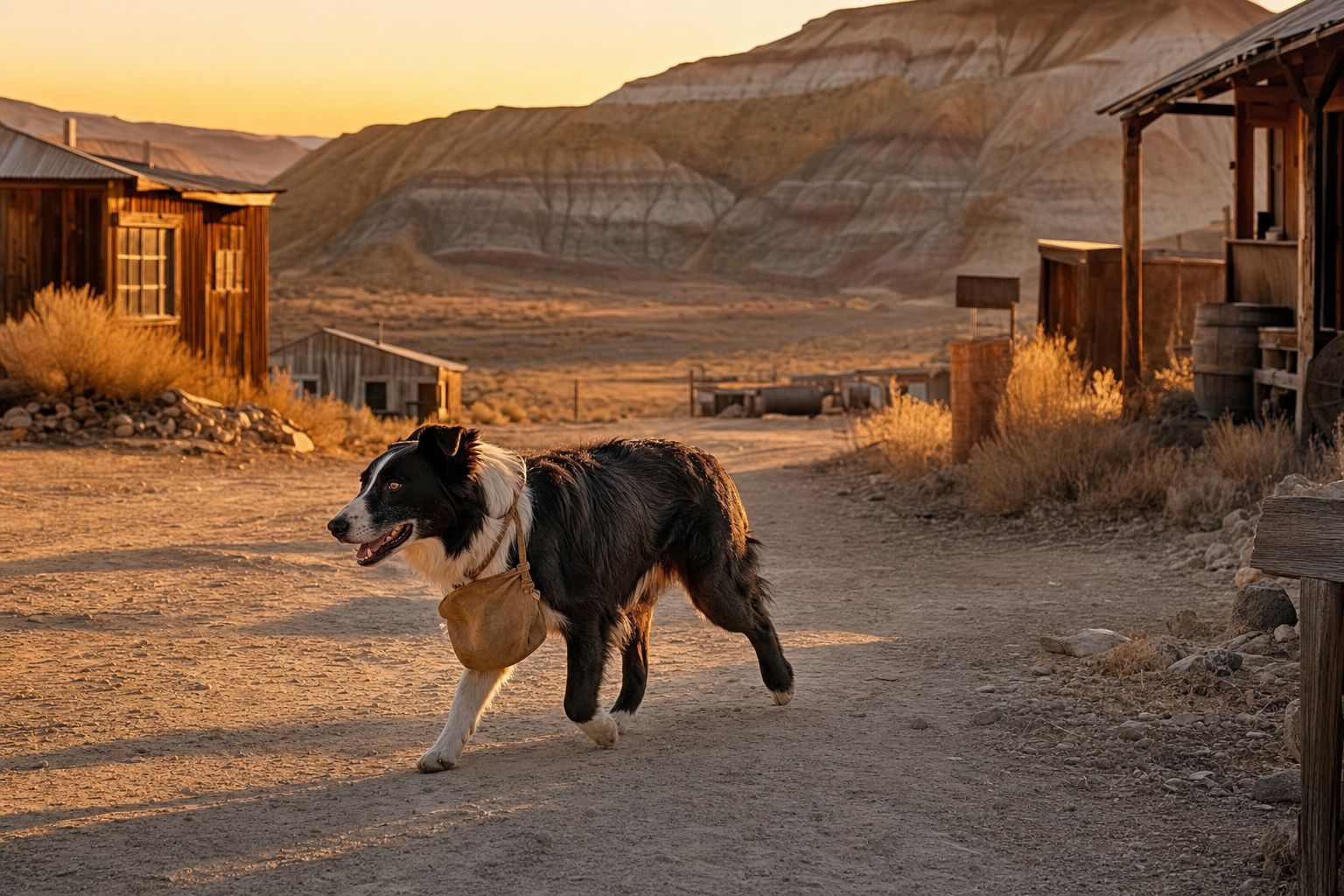
Calico's best-loved resident wasn't a miner at all. Around 1885, town postmaster Everett Stacy adopted a stray black-and-white collie named Dorsey and trained him to carry mail on his own between Calico and the nearby camp of Bismarck, a letter tied around his neck. As the Smithsonian's National Postal Museum documents in its own history of the case, Dorsey made the round trip daily, rewarded at each end with treats and, by one January 1886 San Francisco Chronicle account, an extra beefsteak from the miners whose mail he carried — reportedly the only four-legged letter carrier the US Postal system ever had.
Frequently Asked Questions
What was mined at Calico?
Calico boomed first on silver, discovered in 1881, and then on borax, mined nearby by the Pacific Coast Borax Company after the silver market collapsed in the 1890s.
Why did Calico become a ghost town?
A collapse in silver prices during the 1890s ended Calico’s first boom, and by around 1907 the borax deposits that had sustained a second economic wave were also largely worked out, draining the town’s population.
How much silver did Calico actually produce?
An estimated $86 million in silver and $45 million in borax over roughly three decades of mining; at its 1880s peak, Calico alone accounted for nearly 80% of San Bernardino County’s silver output, which was itself about 70% of California’s total silver production that year.
What was the Silver King Mine?
Calico’s richest single strike, financed by San Bernardino County Sheriff John C. King and sold to San Francisco investors in 1882 for $300,000; the capital and consolidation that followed made the district’s mining operations far more efficient.
Is Calico a real ghost town or a rebuilt attraction?
Both, in a sense — Calico is a genuine former mining town, but unlike sites preserved in "arrested decay," it was actively restored starting in the 1950s under Walter Knott, and much of what visitors see today reflects that restoration rather than untouched original structures.
Who restored Calico?
Walter Knott, founder of Knott’s Berry Farm and a descendant of an early Calico-area family, led a restoration effort in the 1950s. San Bernardino County took over the site as a regional park in 1966.
Where is Calico located?
Calico is in San Bernardino County, in the Mojave Desert northeast of Barstow, California.
Who was Dorsey the mail dog?
A stray collie adopted by Calico's postmaster around 1885, trained to carry mail alone between Calico and the nearby camp of Bismarck with a letter tied around his neck, reportedly the only four-legged mail carrier the US Postal system ever had.
More Ghost Towns
- Dogtown — Butte County, Sierra Nevada foothills
- Bodie — Mono County, eastern Sierra Nevada
- Cerro Gordo — Inyo County, Inyo Mountains
- Randsburg — Kern County, Mojave Desert
- Stirling City — Butte County, Sierra Nevada foothills