

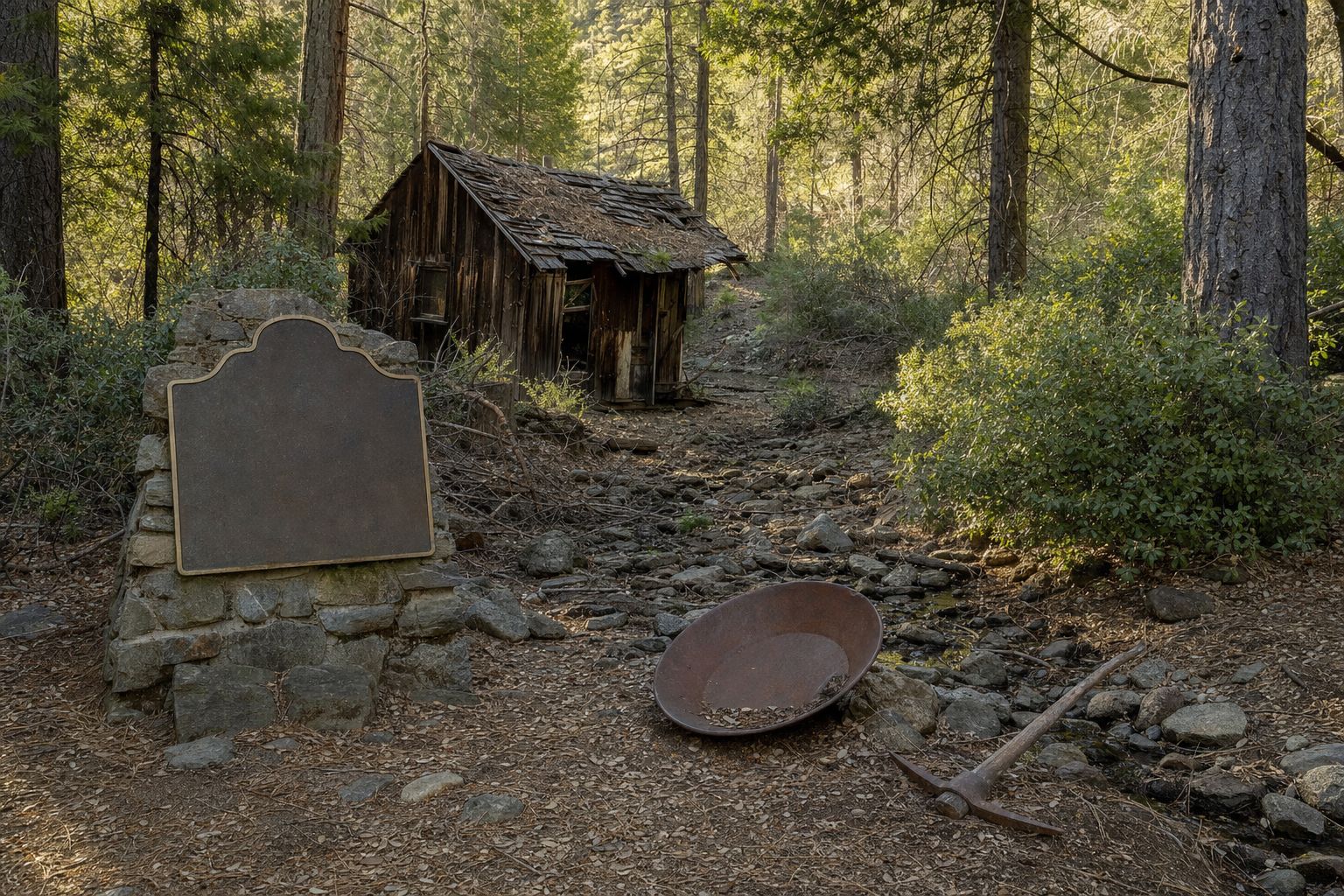
This Dogtown Gold Rush camp packs more genuine story into its short life than its small size suggests: a widow’s three dogs, a gold nugget that made national headlines, and a naming dispute the town’s women won outright.
A Dogtown Gold Rush Camp in Butte County
Dogtown was established as a mining camp shortly after the 1849 Gold Rush, on a ridge above the West Branch of the Feather River in Butte County. It first went by "Butte Mills," after a water-powered sawmill on nearby Little Butte Creek, a name that didn’t last.
Sixteen Dogs, Ten Houses
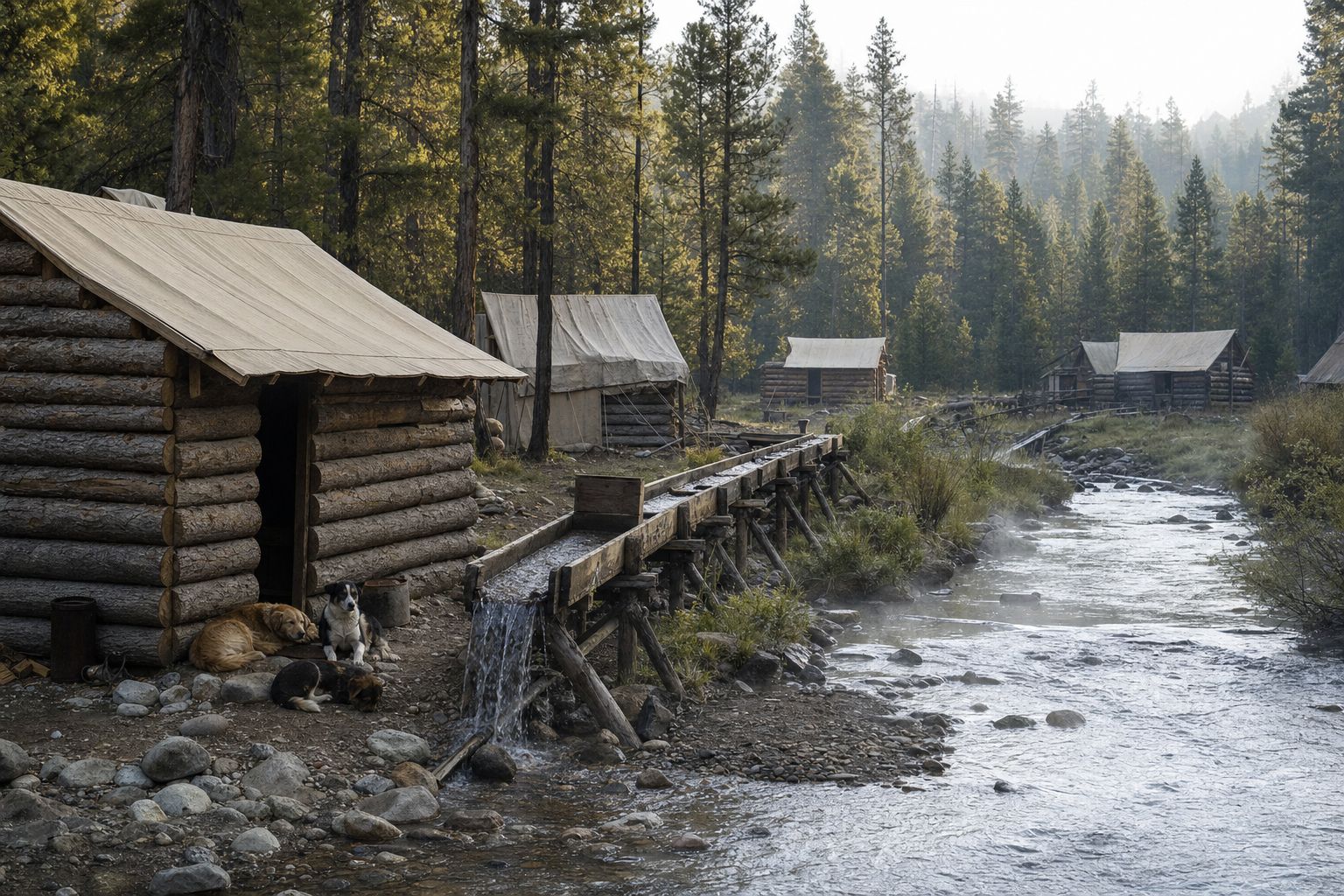
The best surviving account of how the camp got its lasting name comes from Granville Stuart, who later became a prominent Montana pioneer, rancher and memoirist, but arrived here in 1852 as a teenager with his father Robert and brother James, prospecting their way north from Iowa. Stuart recorded that a widow named Mrs. Bassett had walked into the area with no horse or wagon and only three dogs to her name. Her dogs went on to multiply, and by the time the Stuarts arrived, the ten-house camp had — in Stuart’s own count — "sixteen fully developed dogs," enough that the name Dogtown stuck immediately and permanently over "Butte Mills."
The Dogtown Nugget
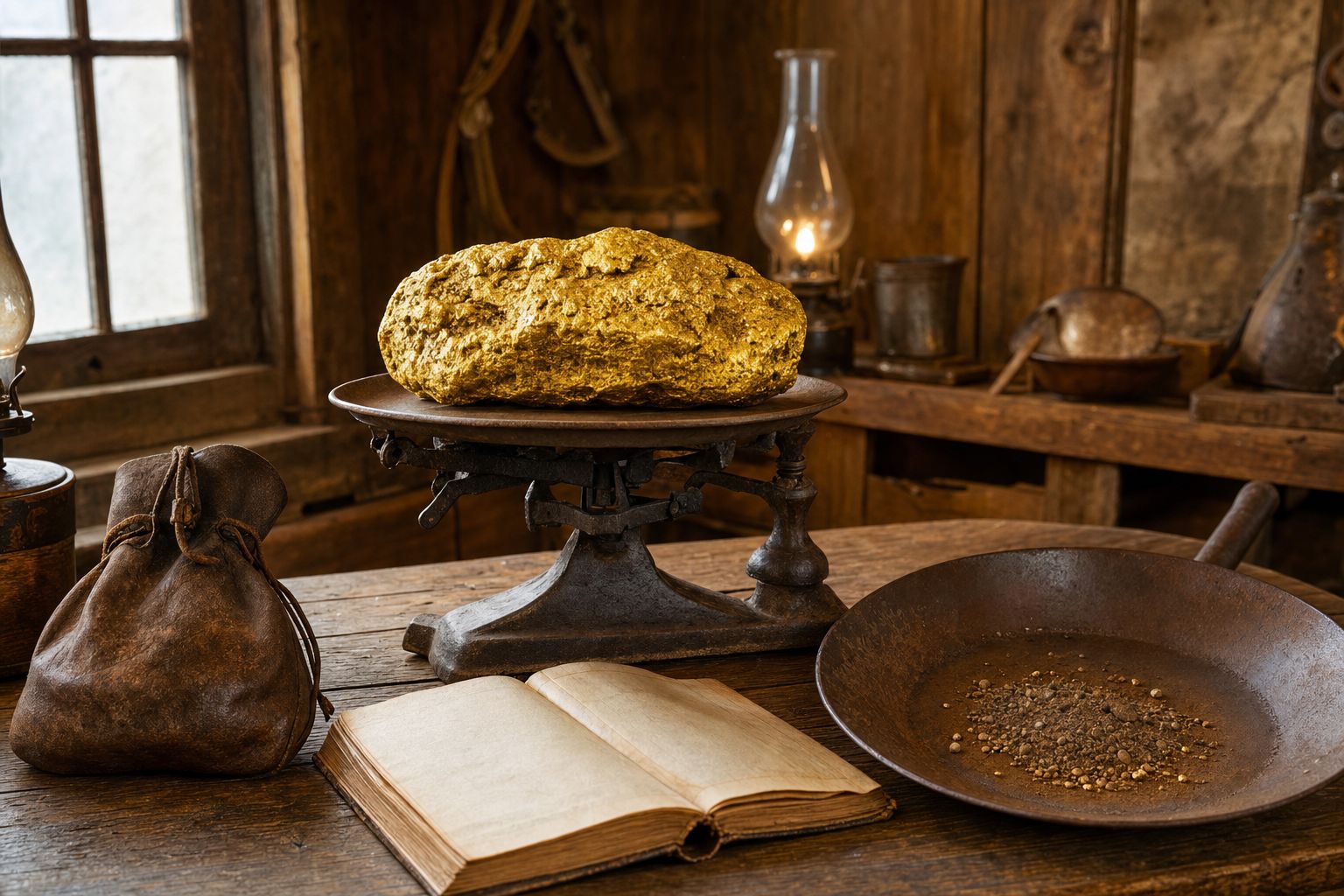
Dogtown stayed a strictly local name until April 12, 1859, when a nugget weighing 54 troy pounds (about 20 kilograms) was found at Willard Gulch, in the southern part of what is now Magalia. It was found by Chauncey Wright, a worker at a hydraulic mining operation, who spotted the nugget of nearly pure gold lying in the mud. It was one of the largest gold nuggets ever found in California, and news of the "Dogtown Nugget" made headlines nationally, drawing a fresh, smaller rush of prospectors to the area.
The nugget itself didn’t survive intact: it was shipped to San Francisco and melted down into a 49-pound gold bar, which was then sold to the San Francisco Mint for $10,600, a substantial sum at the time. The discovery site is now recognized as California Historical Landmark No. 771, marked by a plaque placed by the Native Daughters of the Golden West in 1955 — still the single most famous find of the whole Dogtown Gold Rush era.
Renamed by Popular Demand (of the Women)
The nugget-fueled attention brought growth, and growth brought families. The name "Dogtown" did not survive contact with the new arrivals' wives: an 1860 item in the Marysville Appeal quoted one resident complaining she'd "hate to live in a place called 'Dogtown,'" particularly given how often she had to write the name down. In 1862, the town's female residents got their way and the community was formally renamed Magalia (Latin for "cottages"). Old-timers reportedly kept calling it Dogtown out of habit for decades afterward.
Frequently Asked Questions
Where is Dogtown, California located?
Dogtown was on a ridge above the West Branch of the Feather River in Butte County; the site is now part of Magalia, just north of Paradise, California.
Why is it called Dogtown?
According to Granville Stuart's own 1852 account, a widow named Mrs. Bassett arrived with three dogs of "uncertain ancestry," which multiplied; by the time Stuart's party passed through, the ten-house camp (then called "Butte Mills") had sixteen dogs, and the name Dogtown stuck for good.
What was the Dogtown Nugget?
A 54-pound gold nugget discovered on April 12, 1859, at Willard Gulch near Sawmill Peak, just across the canyon from Dogtown — one of the largest gold nuggets ever found in California. It made national headlines and is commemorated as California Historical Landmark No. 771.
Why is Dogtown now called Magalia?
As families settled in the area following the Dogtown Nugget's discovery, the town's women objected to the name; a complaint even made it into the Marysville Appeal newspaper in 1860. In 1862, female residents successfully petitioned to rename the town Magalia, Latin for "cottages."
Is there anything left of Dogtown to visit?
The original camp itself has left little standing structure; its legacy today is mostly the Magalia community it became and the two related California Historical Landmarks (the Dogtown Nugget discovery site and the historic townsite itself).
When was Dogtown founded?
Dogtown grew up in the early 1850s as one of many small placer-mining camps established during the peak years of the California Gold Rush in the Butte County gold country.
Is this the same Dog Town as the one near Bodie in Mono County?
No — that is a separate, similarly-named camp. "Dog Town" in Mono County (California Historical Landmark No. 792) sparked the first gold rush on the Sierra Nevada's eastern slope and lies near Bodie and Bridgeport, over 150 miles from this Butte County Dogtown. The two share a name and a Gold Rush origin but are otherwise unconnected.
Is Dogtown, California the same as Dogtown, Venice Beach?
No. This Dogtown is an unrelated Gold Rush-era mining camp in the Sierra Nevada foothills. The "Dogtown" associated with 1970s skateboarding culture is a nickname for a section of Santa Monica/Venice Beach in Southern California, with no connection to this site.
More Ghost Towns
- Bodie — Mono County, eastern Sierra Nevada
- Calico — San Bernardino County, Mojave Desert
- Cerro Gordo — Inyo County, Inyo Mountains
- Randsburg — Kern County, Mojave Desert
- Stirling City — Butte County, Sierra Nevada foothills